April Survey Results!

In light of UN Envoy Staffan de Mistura’s efforts in Geneva this month, I thought now would be an appropriate time to share the results of April’s SCID survey.

Beyond the April results (table below), I thought I would reinforce the severity of the situation as generally understood today:

  • 7.6 million people have fled their homes
  • 4 million people have fled the country (1.5 million since peace talks commenced in February 2014)
  • 220,000 people have been killed since the civil war broke out (VOA News / Middle East as cited in the Embassy of the United State London Weekly Update, 7 May, 2015 http://london.usembassy.gov/midest586.html)

These facts, combined with the future activities associated with the conflict, will most likely translate into even more exceptionally complex and dire conditions for post-conflict peacekeeping than is already the norm.  I, for one, would be especially interested in learning just how much forethought, planning, and staging has already been executed for when the conflict finally ceases. If any.

As for the survey results, I have formed the opinion that dinner conversations among the respondents could be especially lively and worthy of ethnographic observation. 🙂

Q1

Do you believe the momentum of ISIS is derived more from Sunni grievance at the hands of prior Shia control or more from deeply held religious ideology?
Answer Choices Responses
More from grievance 25%
More from deeply held religious ideology 37.5%
Equal amounts grievance and ideology 37.5%
Neither are primary drivers (numpty) 0%

Q2

Do you believe the areas affected by ISIS reveal the disintegration of traditional nation states or the formation of new nation states?  
Answer Choices Responses
Disintegration of states 50%
Formation of new nation states 50%
Do I look like I have a crystal ball? 0%

Q3

Do you believe weakening ISIS via military intervention will weaken Jihadist movements as a whole or beget their consolidation?  
Answer Choices Responses
Weaken Jihadist movements as a whole 50%
Beget their consolidation of Jihadist movements 50%
Only kittens can melt those cold, hard, hearts 0%

Q4

Do you believe the more we succeed in hard power tactics the more ISIS will gain in soft power?  
Answer Choices Responses
Yes – I believe hard power will strengthen ISIS soft power 12.5%
No – I believe hard power will weaken ISIS’s soft power 62.5%
Depends on external dynamics and whether groups consolidate 25%

A “Decisive Storm” in Syria and Iraq?

I would like to share this question with you, what do you think the possibilities are to see a “decisive storm” in Syria or Iraq?  who do you think would start this initiative and take the lead of such operation? Would it be through a military intervention or political deplomacy actions?

The Art of Academic Writing (for Policy Makers & Everyone Else)

Christine Cheng (Lecturer in War Studies at King’s College London) has written a very useful blog post on how practitioners-turned-students, in particular, can learn to write academically by:

1. Building comprehension (read deeply and understand how the literature fits together)

2. Mimicing the academic form of your discipline (in terms of tone, style, presentation, use of language etc.)

3. Engaging with the literature and find your academic voice (critique existing literature and use it to build your own arguments)

4. Experimenting with new forms of expressing your ideas (optional)

The full article is here: The Art of Academic Writing (for Policy Makers & Everyone Else).

ISIS Engagement Outcomes – your Anonymised SCID Survey for April

Below is a link to an anonymous, 4-question multiple choice survey regarding ISIS.

This survey is for fun and for future discussion.

Results will be shared and opened up for comment when we hit a target number of responses.

https://www.surveymonkey.com/s/QTL79LS

2015 SCID Symposium – Researching and Working in Conflict-Affected Environments

IMGP4406

On 12 March 2015, the Department of Criminology hosted the second annual Security, Conflict and International Development (SCID) Symposium – Researching and Working in Conflict-Affected Environments.

Presenters included 11 members of the SCID Panel of Experts, including professors, retired senior police chiefs and military officers, government advisers, international human rights and humanitarian law barristers, senior officials in the UN system and other leading international experts in the field of conflict resolution and recovery. A film director and current SCID student, as well as the SCID developer and lecturer, also presented. 

Recordings of each presentation are below with links from the Course platforms (iPad and Blackboard). This will enable those who were unable to attend to watch the presentations and allow all of us to continue the discussions on how best to respond to the challenges of conducting research and working in conflict affected environments and, ultimately, how best to understand and respond to the challenges of conflict and peacebuilding.

Papers from the Symposium will be shortly published in the Annual SCID Reader, which will be provided to all SCID students and uploaded to this Blog. A more detailed overview of the day can be found in a previous post (uploaded on 30 March 2015) and, together with all videos, on the 2015 Symposium page.

2015 SCID Symposium – Professor Adrian Beck – Welcome

Professor Adrian Beck, Head of the Department of Criminology at the University of Leicester, opens the 2015 Symposium and welcomes participants.

2015 SCID Symposium – Matthew Waterfield – Challenges of Monitoring and Evaluation of Programmes in Conflict Affected Countries

PowerPoint presentation: Matthew Waterfield SCID Symposium presentation 2015

In this presentation, Matthew Waterfield discusses the use of evidence in the monitoring and evaluation of programmes in fragile and conflict-affected countries. This presentation underlines the importance, and challenges in the way, of gathering and using evidence in these environments and, in this context, suggests many innovative methods for the collection and use of evidence.

Matthew Waterfield is a Senior Conflict and Security Expert with over twenty years of experience in conflict-affected countries. He is founding Director of niche consultancy firm Aktis Strategy, which provides strategic analysis and programmes in some of the most challenging conflict affected countries. Previous experience includes serving as a senior DPKO official and work as an independent consultant. He has specialist expertise in conflict analysis, stabilisation, security and justice sector reform, conflict transitions and governance. He has also played a lead role in the definition and development of UK government approach to cross-departmental conflict and stabilisation analysis and planning.

2015 SCID Symposium – Dr Richard Byrne – Food Security and Conflict: Stabilisation Forces and Agricultural Awareness

PowerPoint presentation: Richard Byrne SCID Symposium presentation 2015

In this presentation, Richard Byrne describes how food security issues in the field can be assessed as part of a security strategy. In this context, he considers the relationship between food security and conflict, before explaining the importance of military actors being aware of this relationship if stabilisation efforts are to be successful. This presentation then details ways in which to build this awareness and gather and share the requisite data.

Dr Richard Byrne has over 15 years’ experience of agricultural and rural development work in various global environments. He currently focusses on stabilisation and food defence issues, and his most recent work has involved developing licit livelihood strategies within a counter-narcotic environment. He also has recent active military experience within a civil-military operations environment and a background in operating in hostile and challenging environments. His current research is centred on post-conflict agricultural development as well as the development of agricultural extension and development strategies and programmes within counter-insurgency (COIN) strategies.

2015 SCID Symposium – Dr Eleanor Gordon – Bridging the Gap: Conducting Research and Working in Conflict-Affected Environments

PowerPoint presentation: Eleanor Gordon SCID Symposium presentation 2015

In this presentation, Eleanor Gordon provides an overview of some of the requisite skills and guiding principles that those conducting research and working in conflict-affected environments might share. The presentation also details some of the lessons learned that can be shared between academic researchers and practitioners. By sharing these lessons and otherwise bridging the gap between the worlds of academia and practice, it is argued that efforts to better understand and, thus, respond to the challenges of conflict and peacebuilding can be found.

Dr Eleanor Gordon is a Lecturer in Conflict and Security Studies. She developed and delivers the distance-learning MSc in Security, Conflict and International Development (SCID) offered by the Department of Criminology at the University of Leicester. She has worked for over 15 years in the field of international security, justice and human rights, including 10 years in post-conflict environments with the UN and other organisations.

2015 SCID Symposium – Chris Sharwood-Smith – Preparing Police Peacekeepers

PowerPoint presentation: Chris Sharwood-Smith SCID Symposium presentation 2015

In this presentation, Chris Sharwood-Smith provides an overview of the history of training within police peacekeeping and the rationale behind the introduction of pre-deployment training for both individual UN police officers and Formed Police Units. The main drivers for the introduction of this training are examined, before looking at the two specific routes the UN has taken towards initiating member state involvement in this training. In so doing, the presentation analyses the concept of police peacekeeping training from the inception of the UN and provides a clear picture of pressures that have been exerted to achieve the current state of play. The presentation concludes with a brief look at other on-going and prospective future projects in the police peacekeeping training arena.

Chris Sharwood-Smith spent 31 years in the Police Service and has been deployed overseas on stabilisation activities and seconded to the UK’s Foreign and Commonwealth Office (FCO) to work at the UK Mission to the UN on peacekeeping training. Subsequently, Chris became involved in developing Police Peacekeeping training for the UN and represented the UK Government on the Doctrine Development Group as Chair of the Training sub-committee. Since retiring in 2010 Chris has worked with the US State Department and the UN Department of Peacekeeping Operations (DPKO) on police peacekeeping training and development.

2015 SCID Symposium – Maureen Poole – Working in Conflict-Affected Environments: Lessons from Ukraine

PowerPoint presentation: Mo Poole SCID Symposium presentation 2015

In this presentation, Maureen Poole, provides an overview her work on the elections in Ukraine in 2014, focussing on the political issues that impacted her work. This presentation highlighted some of the policing challenges faced in this environment, with the compressed election preparation timeframe, unresolved conflict, large numbers of internationally displaced persons (IDPs), and high levels of crime and disorder.

Maureen Poole has 34 years’ policing experience, retiring in December 2000 to commence a second career within international development focusing on Gender, Policy and Investigations within a Police Reform environment. With extensive experience in West Africa, SE Europe and the Middle East, Maureen has expertise in different policing styles, different national and traditional law systems, international criminal law, and conflict-related sexual violence.

2015 SCID Symposium – Anna Shevchenko – Managing Multi-Cultural Teams in Conflict Environments (Experience from Ukraine)

PowerPoint presentation: Anna Shevchenko SCID Symposium presentation 2015

In this presentation, Anna Shevchenko talks about managing multi-cultural teams in conflict-affected environments, with specific regard to her experience as Deputy Head of the Kiev office of the OSCE Special Monitoring mission to Ukraine in 2014. Providing examples of ways in which an understanding of cultural differences, which is often overlooked, can facilitate improved practice and results.

Anna Shevchenko is the CEO of 3CN, a UK-based consultancy, specialising in cross-cultural risk management and conflict resolution. Anna speaks seven languages and has lived and worked extensively in 32 countries, including as Deputy Head of the Kiev office of the OSCE Special Monitoring mission to Ukraine (2014). She has worked on a number of international crisis projects during the last 15 years. She is also a visiting lecturer at a number of institutions and has published widely, including on the culture, business attitudes and mentality within Ukraine and Russia.

2015 SCID Symposium – Professor Alice Hills – Personal Reflections on Police Research in a Conflict-Affected Environment

PowerPoint presentation: Alice Hills SCID Symposium presentation 2015

In this presentation, Alice Hills talks about the challenges of doing academic research in conflict-affected environments, focussing upon her research in Kano, northern Nigeria. These challenges are particularly pronounced without the support of an organisation that provides security, transport, interpreters and so on – as might be expected if doing research for an International Organisation or NGO, for instance. These challenges include deciding where to live while in a conflict-affected environment; how to get around; where to find an interpreter; how to stay safe and healthy; where to keep petty cash; and what to do in the event of a security incident or unforeseen development. Such practical challenges also often constitute the most instrumental challenges to a research project, often more so than the academic challenges – such as deciding what the research question is and which analytical tools and theoretical framework will be  used  –  which can be more straight forward.

Professor Alice Hills is Professor of Conflict Studies at the University of Durham where her research focuses on why police evolve as they do, and what explains their interaction with governments, militaries and societies in sub-Saharan Africa. Before joining Durham she was professor of conflict and security at the University of Leeds where her research and teaching focused on security governance in fragile states, counter-insurgency in cities, and the relationship between security and development.

2015 SCID Symposium – Dr Anthony Welch OBE – The Pitfalls and Academic Requirements of Research in Conflict Zones

In this presentation, Anthony Welch examines the complexity and challenges of conducting research in conflict, post-conflict and transitional environments. The presentation also provides an overview of some of the key considerations when researching in these environments, as well as some of the methods and approaches that can be successfully used.

Dr Anthony Welch OBE has over twenty years’ field and academic experience in international development and the security sector. A former military officer and with a doctorate, he has worked around the world with the UN, EU, UK’s Department for International Development (DFID) and the Organisation for Security and Co-operation in Europe (OSCE). He taught Security Sector Management and Reform at Cranfield University, both in the UK and abroad, and is currently engaged in security and development matters on behalf the UK and Swedish Governments, including acting as an advisor on international development and security in Parliament.

2015 SCID Symposium – Dr Alex Finnen MBE – The Use of Biometrics and Population Registration as a Control Mechanism in the International Community’s Political, Social and Welfare Development Programmes

In this presentation Alex Finnen addresses the challenges of working as well as researching in conflict-affected environments, the former with particular regard to technological and legislative developments in population control, such as free movement across boundaries. The second half of the presentation looks at research methodologies, with particular regard to the role of the observer.

Dr Alex Finnen MBE is a retired member of the UK’s Foreign and Commonwealth Office (FCO) who, since retiring, has served on a variety of contracts with the EU and the UK Department for International Development (DFID). He has 15 years of service in the Balkans, including as Deputy Head of Mission for the OSCE in Albania and Director General for Elections in Bosnia. He has provided electoral advice to FCO, DFID and the UK Ministry of Defence for a range of countries from 1996 to date.  Alex is an Honorary Associate Fellow of the Centre for Global Politics, Economy and Society at Oxford Brookes University and a Fellow of the Cranfield Forensics Institute.

2015 SCID Symposium – Alex Batesmith – Rule of Law in Conflict-Affected Environments: How ‘International’ Lawyers can Work More Effectively with their National Counterparts

In this presentation, Alex Batesmith discusses how international lawyers in overseas rule of law and transitional justice projects can become more interculturally effective when working with their national counterparts. Alex Batesmith describes the environmental, organisational and individual barriers to international lawyers working effectively, and identifies how improving and further refining specific knowledge, skills and attitudes can help any lawyer become better able to meet the considerable challenges of working in conflict-affected and other difficult environments. In conclusion, Alex Batesmith offers some practical suggestions for organisations and employers as they seek to make structural changes to enable their consultants and employees – and also the projects on which they work – more effective.

Alex Batesmith is a Manchester-based barrister and mediator with twenty years’ practical legal experience in national and international human rights, humanitarian and criminal law, transitional justice, conflict resolution and rule of law issues. Alex spent five years as an international prosecutor for the United Nations in Kosovo and Cambodia and has worked in more than a dozen countries around the world on rule of law and transitional justice issues.

2015 SCID Symposium – Peter Reed – Creating Strategies for Security Sector Reform (SSR) in Volatile, Uncertain, Complex and Ambiguous (VUCA) Operating Environments

PowerPoint presentation: Peter Reed Presentation SSR for VUCA Environments

In his presentation, Peter Reed describes how , for many countries, reform and development of their security sector institutions is a constant iterative process – perhaps, just like a business, to preserve defensive capability and a competitive edge as cost-effectively as possible in the national interest. In post-conflict situations SSR becomes an imperative, and can take on an urgency that may be at odds with the complexity of the challenge and often constrained resources. Peter Reed suggests how the US military-coined ‘VUCA’ (Volatile, Uncertain, Complex and Ambiguous) acronym and Kotter’s 8 Stages for Leading Major Change can be applied to SSR and broader stabilisation interventions. Peter Reed draws on current examples of the challenges presented by highly complex operating environments in fragile and conflict affected States (with short case studies from Libya and Somalia).

Peter J. Reed is the Director and Head of Security Sector Development for WYG. He is an internationally experienced strategy, organisational development, and security sector development consultant, specialising in high level policy advice, policy and strategy development, strategic planning, organisational and institutional capacity assessment, leadership and senior management development. He has significant experience of the project leadership and direction of high value transformational change programmes in the UK and 40 transitional developing countries, and assessment of systemic, institutional and organisational capacity – particularly in complex, fragile or post-conflict environments. He is currently the Team Leader for the UK’s Libya Security, Justice & Defence Programme and is has been a Special Forces Officer.

2015 SCID Symposium – Douglas Brand OBE – The Challenges of Putting the Right People in the Right Place

In his presentation, Douglas Brand considers the adverse impact that not recruiting the right people can have upon the delivery of aid and development. Of particular consideration is the harm that results from conflict between those delivering aid or implementing development programmes, and those recruited to facilitate such work (such as those engaged in logistics, procurement, transportation and security). Douglas Brand explains that part of the reason for this conflict, and for underperformance in delivering aid and development programmes, is that those who are recruited and deployed can lack all but the technical skills for the job. What is required is pre-deployment and in-theatre training, as well as assessment of non-technical competences – including attitudes and cultural sensitivities – during the recruitment process for development professionals. Such non-technical competencies would include the attitudes, cultural sensitivities, behaviours, and beliefs of a potential actor as it has for the technical skills that the work requires them to have.

Douglas Brand OBE is a former UK Chief Police Officer and has extensive experience in international policing, security, stabilisation, and rule of law. Currently the strategic policing adviser to the National Police Service of Kenya, his recent engagements also include similar work for the Nigerian Federal Police, and directing leadership courses for senior officers of the Palestinian Security Forces in the West Bank. He has also been the Senior Police Advisor to the FCO working particularly on security sector reform, (SSR), projects in Africa and Afghanistan, and he was the Chief Police Adviser in Iraq, 2003-4. He is author of the European Union Manual of Guidance on Conflict Management for Police (2000), and has also published several articles on the challenges to rule of law that manifest themselves in International Peace Support Operations.

2015 SCID Symposium – Katharina von Schroeder – We Were Rebels – Film Screening with Director’s Introduction and Q&A

In her presentation, Katharina von Schroeder describes the challenges faced by a documentary filmmaker in researching, preparing for and filming “We Were Rebels”. The presentation also underscores the  significant amount of time needed to build trust and rapport, and the film demonstrated how complex phenomena, such as conflict or peace processes, can be shown through an in-depth study of a single person or place. The film is an award-winning feature-length documentary filmed over two years, which follows the trajectory of a young nation, South Sudan, in overwhelming euphoria from their recent independence until the outbreak of war in December 2013. The central character is Agel, a former child soldier turned basketball captain, who returns to his home country to help rebuild it after decades of war.

Katharina von Schroeder is a film director and current SCID Student. She completed her film studies at the Konrad Wolf School for Film and TV in Potsdam Babelsberg with the feature length documentary “My globe is broken in Rwanda“, which was shown at several festivals and won the Max Ophüls Preis in 2010. During and after her studies, she worked as an editor and author for independent productions, as well as TV stations including the BBC, ZDF, ARTE and Al Jazeera. She has directed a number of films, including “We Were Rebels” and “The Two Sudans”.

Syrian Refugees – BBC Interactive Resource & HCR Video

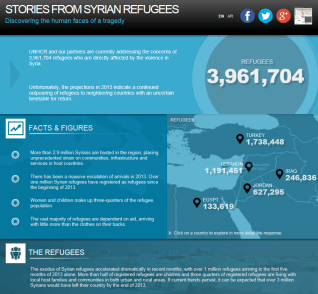
Syria RefugeesThe BBC website has a new interactive resource on Syrian refugees.

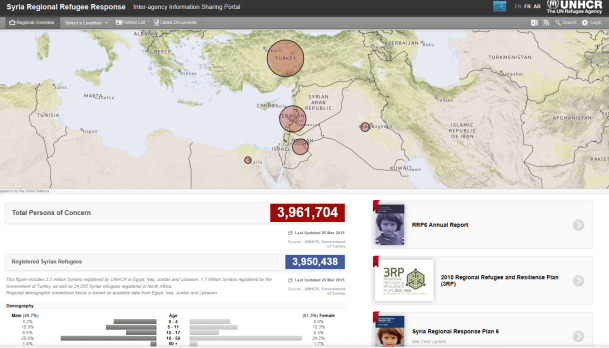
Also uploaded is a recent UNHCR video on people fleeing Syria to Iraq, as well as links to data and other responses on UNHCR-hosted inter-agency information-sharing portal (Syria Regional Refugee Response) and UNHCR’s webpage on Syrian refugees.

syria refugees 3

syria refugees 2