Category Archives: Uncategorized

We Were Rebels

For those who didn’t have the opportunity to view the outstanding feature-length documentary film by Katharina von Schroeder (Film Director and SCID Student), We Were Rebels, at the recent Annual SCID Symposium, the following YouTube clip and film review may be of interest alongside the webpages of the production company and the film’s FB page: LSE Africa – Film Review.

The film follows the story of a former child soldier returning to South Sudan, spanning over 2 years from its independence in 2011 to the outbreak of conflict at the end of 2013. It is currently touring international film festivals and has recently won the prestigious German TV award ‘Grimme Preis’.

Katharina’s presentation at the Symposium on the challenges of researching and filming in South Sudan will soon be able to be watched on this Blog, and her paper will also be shortly published in the Annual SCID Reader.

In the meantime, I would strong encourage anyone to watch this film if they have the opportunity.

March Blog Stats

stats stats 2 stats 3

Blog stats from this month show a very broad geographic demographic of those who view the SCID site – thanks for supporting and contributing!

Call for Papers – Reflections on Revenge: an International Conference on the Culture and Politics of Vengeance

revengeReflections on Revenge: an International Conference on the Culture and Politics of Vengeance

2/3/4 September 2015, University of Leicester
Confirmed keynote speaker: Philippe Sands QC

‘…the sweetest morsel to the mouth that ever was cooked in hell’

The taste for revenge, whether morsel or dish served cold, is something people, groups and nations, and even animals desire. Since time immemorial, individuals and communities have done justice by harming those who have harmed them, despite the costs, and the avengers immortalised as heroes and villains. While the hurts and methods for addressing them may differ, blood feuds, the killing of Osama bin Laden, and revenge porn are all motivated by the need to get even.

This interdisciplinary conference will ask who seeks revenge and why, how it is done, how it is justified, how it is represented, how it feels to get revenge or be on the receiving end. This includes revenge starting with the smallest workplace slights, through family disputes and lynch mobs, to political violence, war and terrorism. We invite contributions, including those not in the academic paper format, from any area of biological, human and social sciences, arts and humanities, and more, that are related to topics including but not limited to:

  • interpersonal revenge, state revenge, collective punishment
  • technologies of revenge
  • revenge cultures, blood feuds, and informal justice
  • revenge, politics and world history
  • revenge, terrorism, armed conflict and retaliation
  • the personal and social costs of revenge
  • revenge, justice and injustice
  • revenge in art, literature and media

This is a multimedia event, and will be contributing to the production of a documentary on revenge by Rex Bloomstein and Justin Temple (RexEntertainment) as well as traditional academic outputs.

Please submit a 250 word abstract via email to revenge@le.ac.uk by April 2nd, 2015.

Institutional Logic and Security Threats

A very useful video to watch in the context of the start of the SCID course (considering where conflict may arise in the future and why) and the end of the course (critically reflecting upon the relationship between transnational security threats and conflict), the following is an excerpt from a presentation by Noam Chomsky who was joined in conversation by David Barsamian.

The Middle East Made Easy…

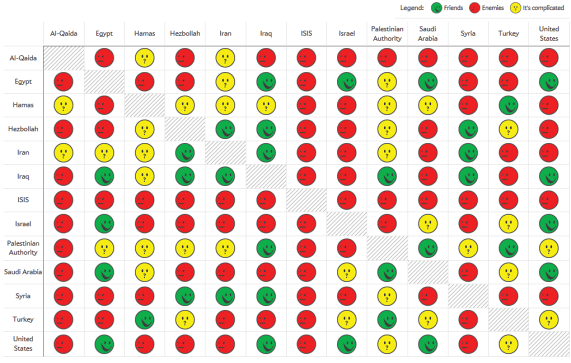
I attach a link to an interactive chart detailing the matrix of relationships in the Middle East. Click on the image below, then click on a smiley face and it will give you high-level detail on the particular relationship it references. And, please, never say I haven’t given you anything… The Middle East Friendship Chart…

smileys

Annual SCID Symposium: Researching and Working in Conflict-Affected Environments (12 March 2015)

The Panel of Experts for the Security, Conflict and International Development (SCID) MSc Course, provided by the Department of Criminology, was established in order to further enhance the learning experience of students and expose them to the knowledge and views of a broad range of leading international experts in the field of conflict prevention, resolution and recovery. Eleven Panel members have been invited to the second Annual SCID Symposium in Leicester on 12 March to present papers on the subject of researching and working in conflict-affected environments. Alongside Panel members, the SCID course developer and tutor will present a paper and a SCID student and professional film-maker, will be presenting a recent feature-length documentary film she directed entitled We Were Rebels, which follows the life of a former child soldier in South Sudan

The theme of the Symposium ties into one of the core aims of the SCID Course and one of the main reasons for establishing the SCID Panel of Experts: to help bridge the divide between academia and practitioners in the field. This is particularly important given the Course aims to equip its students with the knowledge and skills to pursue or advance their careers in this field. Ultimately, it is hoped that by bridging the gap between academia and the field, efforts to understand and better respond to the challenges posed by conflict can be enhanced.

The broad range of papers address issues concerning the challenges of conducting research and working in conflict-affected environments, including: research ethics; monitoring and evaluation of programmes; recruitment and deployment of staff; police research; managing multi-cultural teams; how international lawyers can work more effectively with their national counterparts; preparing police peacekeepers; creating strategies for Security Sector Reform; food security and conflict; the use of biometrics and population registration; and lessons from Ukraine and other conflict-affected environments. Presenters include professors, film directors, retired senior police chiefs and military officers, government advisers, international human rights and humanitarian law barristers, senior officials in the UN system and other leading international experts in the field of conflict resolution and recovery.

Papers from the Symposium will be published in the Annual SCID Reader, which will be provided to all SCID students. Audio and video recordings of the presentations will be uploaded to the Course platforms (iPad and Blackboard). Recordings and the Reader will also be made available via the SCID Blog (www.uolscid.wordpress.com).

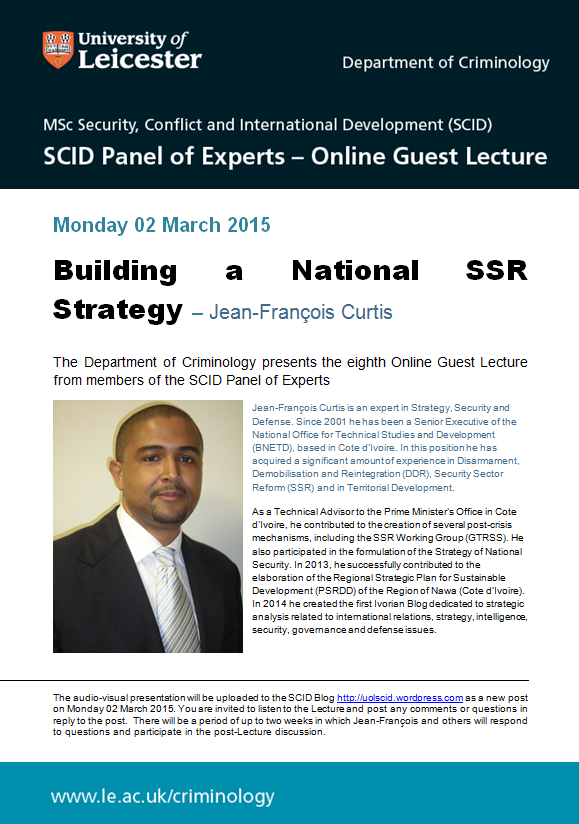
SCID Panel of Experts – Online Guest Lecture – Jean-François Curtis: Building a National Security Sector Reform Strategy: A Case Study of Côte d’Ivoire

This is the 8th Online Guest Lecture by members of the SCID Panel of Experts. Jean-François Curtis presents a lecture entitled ‘Building a National Security Sector Reform Strategy: A Case Study of Côte d’Ivoire’.

Jean-Francois Curtis Advert - imageThe lecture engages with the issue of building a national SSR strategy based on the Ivorian example, specifically addressing the major definitions of SSR, the historical background of the crisis in Côte d’Ivoire, the description of the SSR strategy that was carried out and finally the lessons learned from that SSR process.

The idea is to share the weaknesses and strengths of the Ivorian ongoing experience with SSR and provide lessons that could be useful for SSR programmes being implemented in other post-conflict environments. There are multiple examples of SSR strategies in many contexts and this lecture does not aim to fulfil the impossible task of covering all the issues and problems related to SSR. Instead the lecture gives an insight of what implementing an SSR strategy in an African French-speaking country is like.

Click on the link below to access Jean-François’ Lecture (it is large so it will take a while to download). Please submit any questions or comments within the next two weeks for Jean-François’ attention and/or discussion by other SCID Panel members, students and staff.

BUILDING A NATIONAL SSR STRATEGY – JF CURTIS

On Liberty

https://soundcloud.com/criminology-uni-of-leics/shami-chakrabarti-liberty Shami Chakrabarti – who has been Director of Liberty (The National Council for Civil Liberties) since September 2003, the UK’s leading civil rights organisation – gave the most recent Scarman Lecture at the Department of Criminology, University of Leicester. Shami ChakrabartiIn On Liberty, Shami Chakrabarti explores why our fundamental rights and freedoms are indispensable. She shows, too, the unprecedented pressures those rights are under today. Drawing on her own work in high-profile campaigns, from privacy laws to anti-terror legislation, Chakrabarti shows the threats to our democratic institutions and why our rights are paramount in upholding democracy. Other Scarman Lectures can be accessed on the Department’s website.

Army professionalization: Case study of Cote d’Ivoire

The question of the professionalization of the Ivory Coast army, is a subject which for several decades remains thorny. Indeed, after several politico-military crises , Ivory Coast reconstructs quite slowly on still fragile foundations. The commentators of the national context, tend to separate the advent of a professional army from the stabilization of the country. How to build a professional army, when the causes of the politico-military crises which shook the country, are partially taken into account in the resolution of those crises? The multiple breaches of the Ivory Coast soldiers tarnished their image, then contributed to the bad governance of the defence sector (Transparency International Government Defence Anti-Corruption Index 2013, Ivory Coast ranked High risk). The massive insufficiently qualitative recruitments, operated during and after all these crises, the last one of which was the one of 2010, came to dissolve the achievements of the 70s and 80s which were relevant years for the Ivory Coast army until the military coup of 1999. The FANCI (Armed Forces of Ivory Coast), were a model up to the 90s because they embraced professionalism and republican values.

President Ouattara, in his diverse speeches intended for the armies, always emphasized the professionalism and the necessity to build an ” emerging army “. He constantly warned the Republican Forces of Ivory Coast (FRCI since 2011, former FANCI), as for their behaviour which have to be the reflection of discipline, public-spiritedness and republican values.  He also reminded to the servicemen, their place in society as guarantor of freedom and territorial integrity. Furthermore, he reminded them that their duty is to serve the nation. Besides, from all the troubles which undermine the armies, corruption, abuses and political instrumentalization remain the most fought but still active concerns.

We cannot consider the professionalization of the armies without defining it. What thus a professional army? The professionalization of an army, is its profound qualitative transformation at the staff level. This transformation aims at improving the national defence sector, to make it an effective and reference tool. Professionalization comes along with a reconsideration of staff (reduction, rejuvenation, feminization, training, careers, academic route, etc.), to adapt itself to new missions and realities. In most of the cases, the professionalization of the armies is a consequence of an evolving and revised defence policy. The example of France in this domain is edifying in many respects, despite the multiple controversies which ensued from it. Professionalization thus emphasizes the capacity building of servicemen and women.  Training is at the heart of professionalization also called “career army”. To say things simply, by choosing the professionalization of an army, a State chooses quality through training and technicality.  Professionalization brings answers to endogenous needs (low levels of education and training), as well as exogenous ones (new threats like cyberwar, terrorism etc.) which require specific skills and new answers, adapted to reality and its new challenges.

In Ivory Coast, the professionalization of the armies has a implementation framework which is since 2011, the Security Sector Reform (SSR). Indeed, this vast qualitative transformation of all the actors of the security sector, towards a better governance, integrates specific reforms  for the armies, aiming at professionalization. The illustration of this current professionalization is the capacity building of the officers and the non-commissioned officers since a few years as well as the creation of specialized units (CCDO, Special forces, etc.) to tackle specific threats. Historically, the professionalization of the armies in Ivory Coast, knew four major periods:

1/ From 1970 till 1990: the period of construction and consolidation of the armies. For this period, the armies had their hour of glory and the question of the professionalization was of the exclusive competence of the Ministry of Defence.

2/ From 1990 till 2002: the period of upheavals (military coups) and unprecedented political instrumentalization. There also, the Ministry of Defence was the unique actor of a possible professionalization.

3/ From 2002 till 2010: the period of the major discussions on defence or the stammerings of the professionalization. For this period, the leading actor of professionalization became because of the political context, the Prime Minister’s Office, chairing the Workgroup on the Refoundation and the Restructuring of the Armies ( GTRRA). This workgroup gathered all the actors of national defence, to propose a new defence policy accompanied by a plan of professionalization and of reunification of the conflicting parties ( FANCI / FAFN).

4/ Since 2011: the Presidency of the Republic, through the National Council for Security, coordinates the professionalization of the armies, the base of which was in 2012, the Workgroup on the Security Sector Reform (GTRSS), think-tank on the aforementioned reform and its implementation. The FANCI merged with the FAFN, became FRCI in 2011.

This short historic reminder, highlights a major evolution, in the appropriation of professionalization at the national level. From the Ministry of Defence ( 1970-2002 ) through the Prime Minister’s Office ( 2002-2010 ) to find itself at the Presidency (2012-) nowadays. The professionalization of the armies was never decreed officially but it is implicitly quoted in all the reference texts, such as the political agreements since 2003, the national security policy as well as the national SSR strategy. There were thus several attempts to make rational ” the professional army ” in Ivory Coast, but we are not at a time of assessment because it is only since 2011 that this project was really conducted.

Once this brief inventory of the professionalization of the armies in Ivory Coast achieved, it seems more than necessary to remind some of the challenges that faces the implementation of a professional army:

1/ The consideration of sociopolitical prerequisites is a priority in the professionalization of the armies. So the issues connected to national reconciliation and post-crisis stabilization, must be resolved to guarantee a successful professionalization. Let us not forget that the cement of an army is its cohesion. As such, the army owes in particular, to be a model of tolerance and to reflect the nation in its diversity. The germs of the discord and conflict have to disappear.

2/ An exhaustive review of the professionalization of the armies is more than necessary. Indeed, in spite of the attempts of professionalization and the multiple realized audits, what about the achievements? Where are we with this professionalization? What are the weaknesses and strengths of the initiatives up to here? It is urgent to conduct an evaluation of the professionalization of the armies in Ivory Coast so as to update the existing data. For instance, the Ministry of Defence announced that the armies went from 15000 men in 2011 to 23000 today. How is this increase of staff part of an efficient professionalization plan? Is this increase as qualitative than it is quantitative?

3/ The formulation of a strategic program for the professionalization of the armies is imperative. On this point it is good to remind the urgency of an in-depth reflection regarding the professionalization of the armies on the horizon 2025. This strategic program will take into account studies already realized on the subject, will identify the key areas of this professionalization and will translate into an action plan, the retained actions for that purpose.


IS and the barbarism of war

An excellent article which puts the violence of IS into context.

richardjacksonterrorismblog's avatarJust trying to stay human...

The following is an op-ed I recently published in the Otago Daily Times about the barbarism of ISIS and how we might put it in context:

The latest atrocity by Islamic State forces in Iraq in which a captured Jordanian pilot was burned to death has provoked an understandable wave of commentary from around the world. The horrific spectacle created by the killing raises a number of crucial questions for us to consider. Is Islamic State (IS) a new, more brutal kind of rebel group? What purpose can such brutality serve? How should the world respond to the increasing brutality of the war in Iraq, and what does this latest development tell us about Western strategy in the region?

Sadly, this atrocity, and those previously committed by IS, are actually fairly banal in the history of warfare. Depraved cruelty and inhumanity is part and parcel of the very nature of…

View original post 397 more words

Working and Studying in the Field

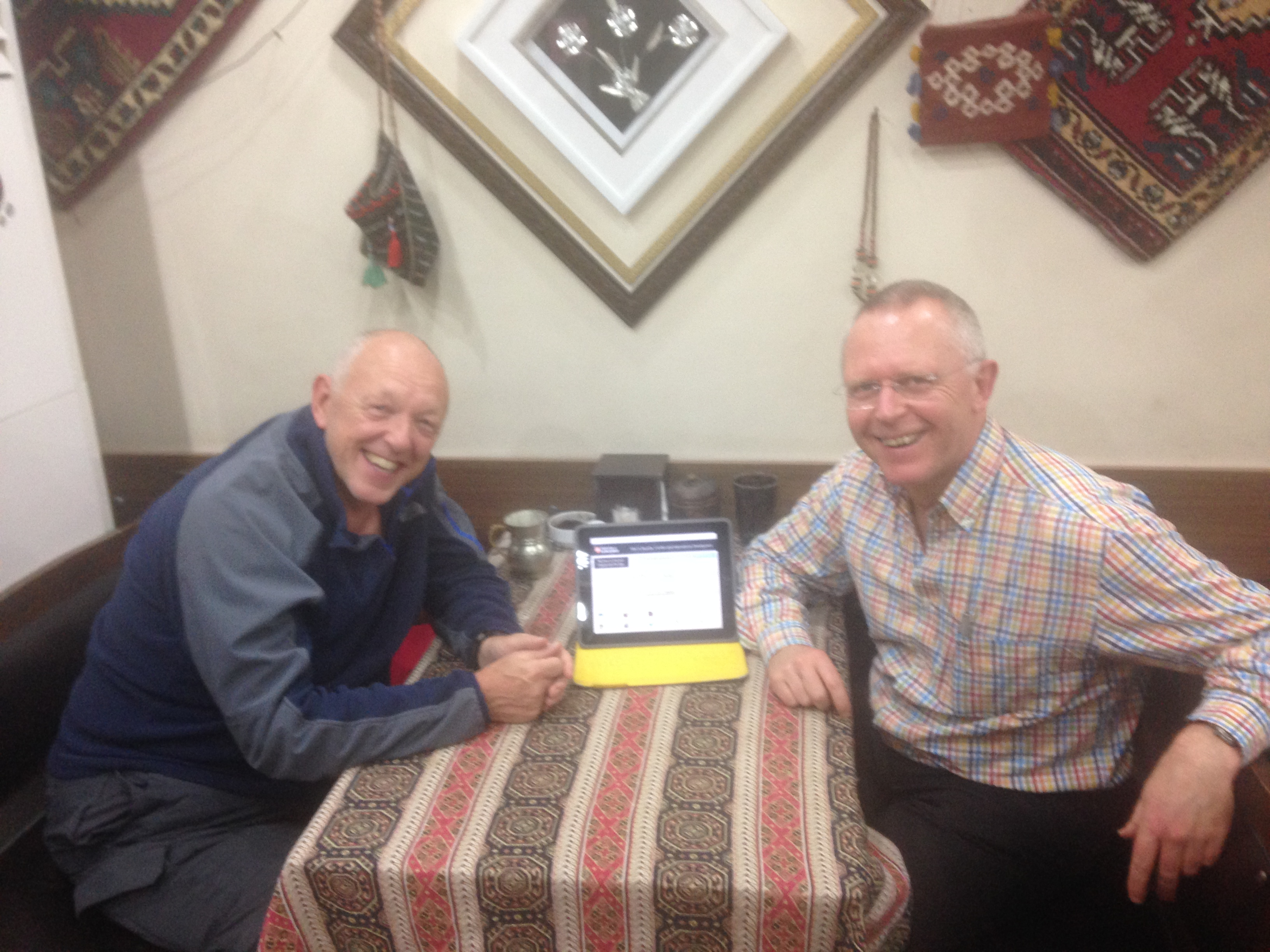
This is a fantastic picture and an example of excellent working relationships between students and dissertation supervisors, which is a key feature of the SCID Course. Peter Aschenbrenner is currently completing his MSc SCID dissertation. Lenny Gill is his supervisor and is also a member of the SCID Panel of Experts. They have maintained regular contact with each other throughout the dissertation process, while both deployed to conflict-affected environments. By chance they had an opportunity to meet while on business in Istanbul, and below is a picture of their face-to-face tutorial. Thank you for the outstanding support and guidance you have provided to Peter throughout the dissertation process, Lenny, and very well done Peter for the amount of work you have done often in challenging circumstances – I am very much looking forward to reading your dissertation!

Lenny and Peter - SCID

Capital, the State and War: The Risks of Method

This is a re-blog of an excellent discussion by Campbell Craig of Alex Anievas’ new book, Capital, the State and War (2014). This book builds upon Kenneth Waltz’s 1959 publication of the same name, which aims to explore the recurrence of war; looking beyond reasons of human nature and regime type, which were considered to be inadequate explanations alone. Anjevas builds upon the Marxian theory of uneven and combined development to theorise contemporary international relations. This theory was developed by Trotsky to explain how uneven economic competition between counties whose economies are intertwined leads to interstate conflict. Craig provides a detailed analysis of the relevance of Anievas’ wok in explaining the ‘thirty year crisis’ of 1915-45. He draws attention, however, to the weaknesses of the theory of uneven and combined development in explaining international relations post ’45.While, however, as Craig argues, ‘there has been no war among major capitalist powers’ since the end of WW2 there have, of course, been various intrastate wars where the interests and agendas of major capitalist countries have been – and continue to be – played out.

Eleanor

Guest Authors's avatarThe Disorder Of Things

CraigA forum contribution from Campbell Craig, the first in our series responding to Alex Anievas’ new book, Capital, the State and War. Campbell is Professor in International Politics at Aberystwyth University, and the author of several books, including Glimmer of a New Leviathan: Total War in the thought of Niebuhr, Morgenthau and Waltz (2003), The Atomic Bomb and the Origins of the Cold War (2008, with Sergey Radchenko), and more recently America’s Cold War: the Politics of Insecurity (2012, with Fredrik Logevall). Campbell’s work has appeared in World Politics, Ethics & International Affairs and the Review of International Studies. He is also currently finishing an article on the nuclear revolution and neo-Trotskyism.


Woodrow Wilson 17c Stamp

In 1959 Kenneth Waltz published Man, the State and War, a study of three different levels of analysing international relations and their attempts to answer the question why war recurs. Waltz tackled his…

View original post 1,887 more words

Anti-Terrorism in Africa: A multidimensional strategy!


The terrorist attacks which shook France for 72 hours between January 07th and January 9th, 2015, transposed in a rough way on the French territory, the horror lived in sub-Saharan Africa by the populations and the powerless states. Indeed, the balance of the attack is heavy, 3 shot down terrorists, 17 dead victims, about 20 wounded persons and the affected millions of French, all this in 3 days. Only the sporadic attacks of Boko Haram in Nigeria can boast about such macabre balance which very often are heavier. It is not only the macabre discount which has to prevail here, in consideration of the multiple victims of the terrorism in the world, but also the symbol which was scoffed! Yes, it is France, country of human rights, country embodying the freedom of expression which was quite hard struck by radicalism and intolerance. Charlie Hebdo embodied this vital freedom certainly lively and raw by moment but authentic. These attacks made several victims but could we think that freedom of speech would be the target of terrorist acts?

Africa is not unfortunately outdone in this ” inhumanity of terror “, the continent undergone with violence and powerlessness the repeated assaults by several terrorist groups which are mainly, AQMI (branch of Al-Qaeda), Boko Haram and Al-Shabaab. There also, the macabre discount is without appeal: we reach 15000 deaths to this day (from 2000 till 2014)! According to the Institute for Economics and Peace ( IEP), in its 2014 Global Terrorism Index, those 3 groups are among the 10 most active, violent and murderous terrorist organizations since their creation. As an example, from 2002 till 2013, Boko Haram, with about 10000 men, conducted 750 attacks in Nigeria, with a macabre discount of 3500 deaths, on the basis of a religious extremism ,which translates the will to establish an Islamist state (unconditional application of the Sharia in Nigeria).

Other international indexes come to consolidate the IEP Global Terrorism Index, in particular the AEGIS Advisory 2015 Strategic Risk Outlook and also GEOS 2014 Risk Map. Both, GEOS and AEGIS are specialized in country-risk classification and in strategic intelligence.

Having made this alarming observation, we are not going to come back on the causes, nor on the modus operandi (lone wolves, conventional attacks, kidnappings, hostage taking, cyber-attacks, etc.) of these terrorist groups, which have moreover their specificities both in the ideological and the operational approaches, but we are going to identify a strategy for a regional, coherent and inclusive response to the permanent threat of religious extremism.

Indeed, it is the sketch of a multidimensional strategy that we advise, to thwart better the expansion of terrorist ideology on the continent, while taking for model, the military operations theatre which is characterized by several fronts. So our multi-form strategy, takes into account simultaneously 8 fronts:

1/ The ideological front: terrorism draws its strength from an ideology of religious extremism. The “Sharia” is the classic model which attracts many candidates. The west is presented as ” the wound ” and the Islamist radical movements are the cure to this “wound”. It would be thus convenient, to beat terrorism on its favourite ground which is ideology. The African societies almost quite westernized, have to create for their youth a viable and pragmatic ideological alternative to avoid the attraction of radicalism. It is the introduction of an ideal of life, that will allow to make the difference between terrorism and democracy. The African countries thus owe within a short space of time, to set up multidisciplinary committees asked to think about this societal ideal (a model of African democracy), which could make young people dream, give them opportunities and so  divert their attention from religious obscurantism.

2/ The front of the development: at this level, it is a question of setting up tools which will allow to contain the attractiveness of terrorism. Indeed, the strong rate of impoverishment and illiteracy of these African societies, constitutes a melting pot for the recruitment of young people, in the middle of an identity crisis  and in search of marks. We thus suggest, an urgent implementation, of the UNDP Human Development Index (HDI) measures , in every concerned country. Besides, it is important, to involve the civil society in this debate for an inclusive and participative response. Every African country could create at the community level, a prevention committee of sectarian drifts stemming from the diversion of Islam. Better, the creation of local watch and sensitization committees in every village of the threatened or border countries, would be a main advantage. These local committees would stress the sensitization of young people as for the risks of religious toughening and would serve as early warning devices.

3/ The military front: here, it is a question of striking militarily all the terrorist groups at their heart. Still it is necessary, that the African armies are equipped and trained for such an option. Having said that, a joint answer for example, at the level of ECOWAS with the support of the western countries could allow to weaken the terrorist threat in the sub-region, following the example of the backward movement of AQMI in Mali (at least of its weakening). At this level, it would be necessary in every African country, to create as a matter of urgency units specialized in the in-depth action (special forces) to act in a surgical and effective way against these groups. The air or logistic support of western countries would be ideal. We recommend as a sub-regional answer (ECOWAS), the creation of a mixed elite unit based on the French GIGN (Groupe d’Intervention de la Gendarmerie Nationale) or the US SWAT (Special Weapons and Tactics), to mutualize the resources of the African countries in this merciless fight. So you should not ignore, the capitalization of decisive experience of a country as Chad which demonstrated its operational and tactical capacities to face these groups. Finally, the outsourcing of the fight against terrorism, remain a complementary option, to halt the advance or the nuisance of these groups. This outsourcing would materialize for any country in the region, by the use of Private Military Companies (PMCs) likely to have the necessary skills and adequate equipment.

4/ The intelligence front: intelligence is at the heart of the fight against terrorism in Africa. It is a question for African countries, to consult at the sub-regional level in order to mutualize and share the necessary means to this end. Besides, most of those countries display a deficit in intelligence for which they pay a very high price. It would be thus wise, to polarize the efforts around a sub-regional synergy for intelligence. There also, the western support through training and logistics, would be an asset. Finally, national capacity building regarding strategic intelligence, remains the keystone of this terrorist problem.

5/ The religious front: the unprecedented mobilization of the Muslim communities in Africa, is more than necessary to denounce religious radicalism and its consequences which also strike Muslims. Moreover, there is only one Islam and many extremist Islamist aberrations. It is these abuses which must be denounced, because they negatively affect this noble religion. This option can seem utopian, because many African societies are already eroded by religious sectarian aberrations and thus avoid the sensible subject.

6/ The legislative front: this chapter is certainly one of the most important, because it concerns the revision of the legal arsenal of the African countries, to adapt it to the terrorist threat. Indeed, the national legislations have to evolve, so as to incorporate in a coherent and realistic way, provisions that would facilitate the intervention of security and defence forces in the fight against terrorism.

7/ The international front: an international cooperation is more than vital, to allow the African countries to prevent and push back terrorism. The support in capacity building, in training and in logistics would be the basis of this stronger anti-terrorist cooperation.

8/ The financial front: finally, this last aspect of our strategy, determines almost our whole proposal, because the sinews of war remains money. We recommend that the African countries, organize discreet national and international fund raising for the antiterrorist fight, following the example of the fight against Ebola, which mobilized donors. Of this financial solidarity will depend the outcome of the anti-terrorist struggle.

In conclusion, the fight against terror, in order to push it back or why not annihilate it (ideal), constitutes the world major priority today. It would be thus convenient for the African countries, to take advantage of this upsurge of international solidarity and consciousness, to strengthen their national strategies and so contribute actively to this struggle for freedom and democracy. A multidimensional and joint strategy is thus imperative to reach that goal.


Online Seminars in Peacebuilding and Statebuilding

The Centre for Security Governance (CSG), Balsillie School of International Affairs (BSIA), and Wilfrid Laurier University Global Studies department (WLU) are hosting a series of eight online seminars focusing on the theme of “Contemporary Debates on Peacebuilding and Statebuilding.”

The first event, to be held on Wednesday January 28 from 1:00PM to 2:30PM EST will ask the question: “Is Peacebuilding Dying?”

These events will be free to attend and open to the public. They will be held on the Spreecast platform, and will feature live panel presentations and an open discussion period where you can interact with the panelists. Panelists for the first session include Dr Paul Jackson, Dr Mark Sedra, Dr Roger Mac Ginty, Dr Anna Jarstad.

For further details and to access the seminar, please visit CGS’s website.

Conflict Predictions 2015

The President of the International Crisis Group (ICG), Jean-Marie Guéhenno, has recently published ’10 Wars to Watch in 2015′ – the organisation’s annual look at likely crises in the coming year – in Foreign Policy, available at this link and available on the ICG website here. The 10 conflicts and crises identified as likely to be the most dangerous in 2015 are:

  1. Syria, Iraq, and the Islamic State
  2. Ukraine
  3. South Sudan
  4. Nigeria
  5. Somalia
  6. Democratic Republic of Congo (DRC)
  7. Afghanistan
  8. Yemen
  9. Libya and the Sahel
  10. Venezuela

CFR Global Conflict TrackerThe Council for Foreign Relations (CFR) has also recently published the results of a public opinion survey conducted in the US on conflicts that could erupt or escalate in the coming year: the report and an overview can be accessed here and an interactive guide to US conflict prevention priorities can be accessed here.

At the start of the SCID Course, when considering conflict prevention and the causes of conflict, students are asked to identify place where they think conflict may arise or escalate in the next 12 months – these predictions are returned to later in the course. Reflecting on recent conflicts and conflict predictions can help in the analysis of conflict trends and dynamics, as well as present potential conflict prevention and peacebuilding opportunities. As Guéhenno concludes his reflection of the conflicts in 2014 and predictions for 2015:

The picture that emerges from this survey of conflicts is grim. There is, however, one glimmer of hope — the increasing fragmentation of the world also means that there is no overarching divide. Even if the deepening crisis between Russia and the West is unsettling Europe, the last remnants of the Cold War are disappearing as Cuba and the United States normalize their relations. Many conflicts can now be dealt with on their own merits, and the growing role of regional powers — while adding complexity and, in some cases, new antagonisms — also creates opportunities for more creative diplomacy.

This is no time for the “old powers” to retrench, but they do have to acknowledge that successful peacemaking in 2015 will depend on working with a much broader array of countries than they have in the past (Guéhenno, 2014: n.p.).

Despite the availability in the public domain of many such predictions and tools to help analyse where conflict might erupt or escalate, there is often surprise at the outbreak of new conflicts and crises. Similarly, despite the many tools that do exist to help determine where conflict, violence or insecurity may erupt or escalate, conflict prevention rarely appears to be a priority – in spite of the obvious human and financial benefits of preventing conflict. Some of the tools and resources are linked to in the SCID Course materials and copied below. There are many insightful reflections on the causes of conflict and conflict prevention in the SCID discussion boards – the value of them often lies in their specificity and being informed by in-depth experience in and understanding of a particular region or place. As those engaged in peacebuilding begin to increasingly value the role of local communities in building peace, at least in theory, a community-based bottom-up approach to conflict prevention might also be worth considering (utilising existing local peace committees e.g.) – informed by but not limited to some of the predominantly quantitative data contained in the resources listed below.

  • Heidelberg Institute’s Annual ‘Conflict Barometer’ – available here.
  • Vision of Humanity’s ‘Global Peace Index’ – available here.
  • The World Bank’s Worldwide Governance Indicators – available here.
  • The Fund for Peace’s Fragile States Index – available here.
  • The UN Development Programme’s (UNDP) Human Development Index (HDI) – available here.
  • The biennial publication of the Center for International Development and Conflict Management (CIDCM) of the University of Maryland, ‘Peace and Conflict’ – available here.
  • The Minorities at Risk (MAR) project at the University of Maryland’s CIDCM – available here.
  • Datasets of the Uppsala Conflict Data Project (UCDP) of the Department of Peace and Conflict Research of Uppsala University, Sweden – available here.
  • Stockholm International Peace Research Institute’s (SIPRI) Facts on International Relations and Security Trends (FIRST) system – available here.
  • The Organization for Economic Cooperation and Development’s (OECD) Country Risk Classification – available here.
  • The Cingranelli-Richards (CIRI) Human Rights Dataset – available here.
  • The University of North Carolina’s Political Terror Scale – available here.
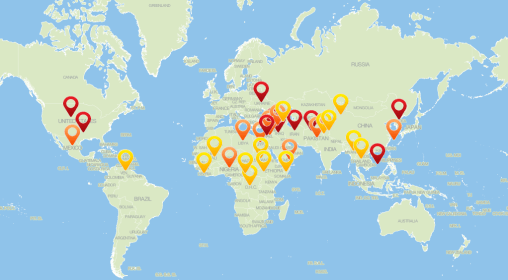
  • The International Crisis Group’s (ICG) monthly ‘Crisis Watch’ – available here. You can also access an interactive conflict risk alert map (below) –

I look forward to continue discussing the way in which conflict can be prevented from breaking out and escalating. Eleanor

ICG jan 15

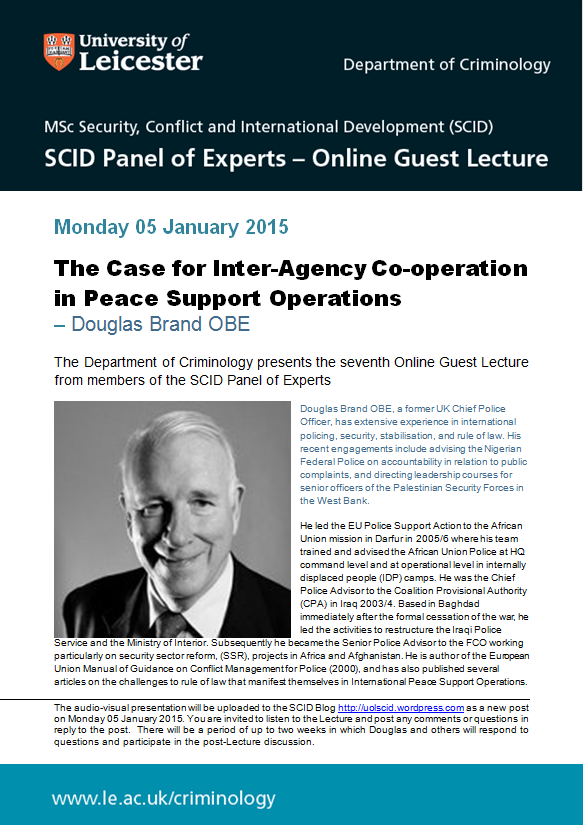
SCID Panel of Experts – Online Guest Lecture – Douglas Brand OBE: The Case for Inter-Agency Co-operation in Peace Support Operations

This is the 7th Online Guest Lecture by members of the SCID Panel of Experts. Douglas Brand OBE presents a lecture entitled ‘The Case for Inter-Agency Co-operation in Peace Support Operations’.

Douglas Brand Online Guest Lecture - advertThis lecture presents the case for inter-agency co-operation in Peace Support Operations (PSOs), particularly in light of the absence of willingness for co-operation despite general agreement that co-operation is necessary. The lecture considers impediments to successful co-operation and how co-operation can best be facilitated by looking at examples from Iraq, Darfur and Palestine and by reflecting upon lessons identified and lessons learned.

Click on the link below to access Douglas’ Lecture (it is large so it will take a while to download). Once you open the PowerPoint presentation, you will have to click on ‘Slide Show’ (at the top of the screen) then ‘From Beginning’ (top left) to listen to the presentation.

Please submit any questions or comments within the next two weeks for Douglas’ attention and/or discussion by other SCID Panel members, students and staff.

Douglas Brand – Inter Agency Activities in Peace Support Operations

2014 in review

The WordPress.com stats helper monkeys prepared a 2014 annual report for this blog.

Here’s an excerpt:

The busiest day of the year was March 31st with 90 views. The most popular post that day was SCID Panel of Experts Online Guest Lecture – Dr Tony Welch OBE – Introduction to SSR, Human Security and UNSCR 1325.

Click here to see the complete report.

SCID Students around the World

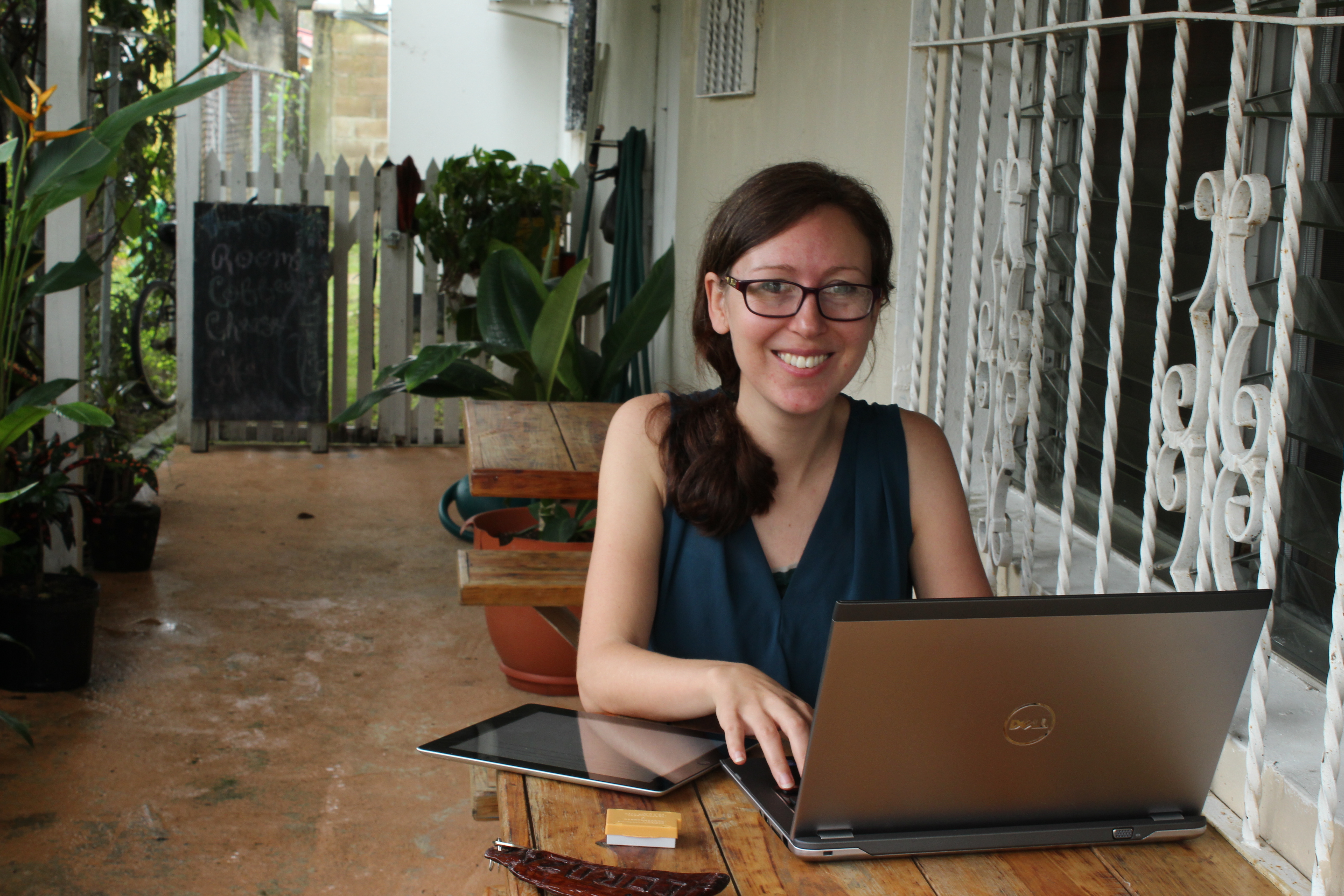
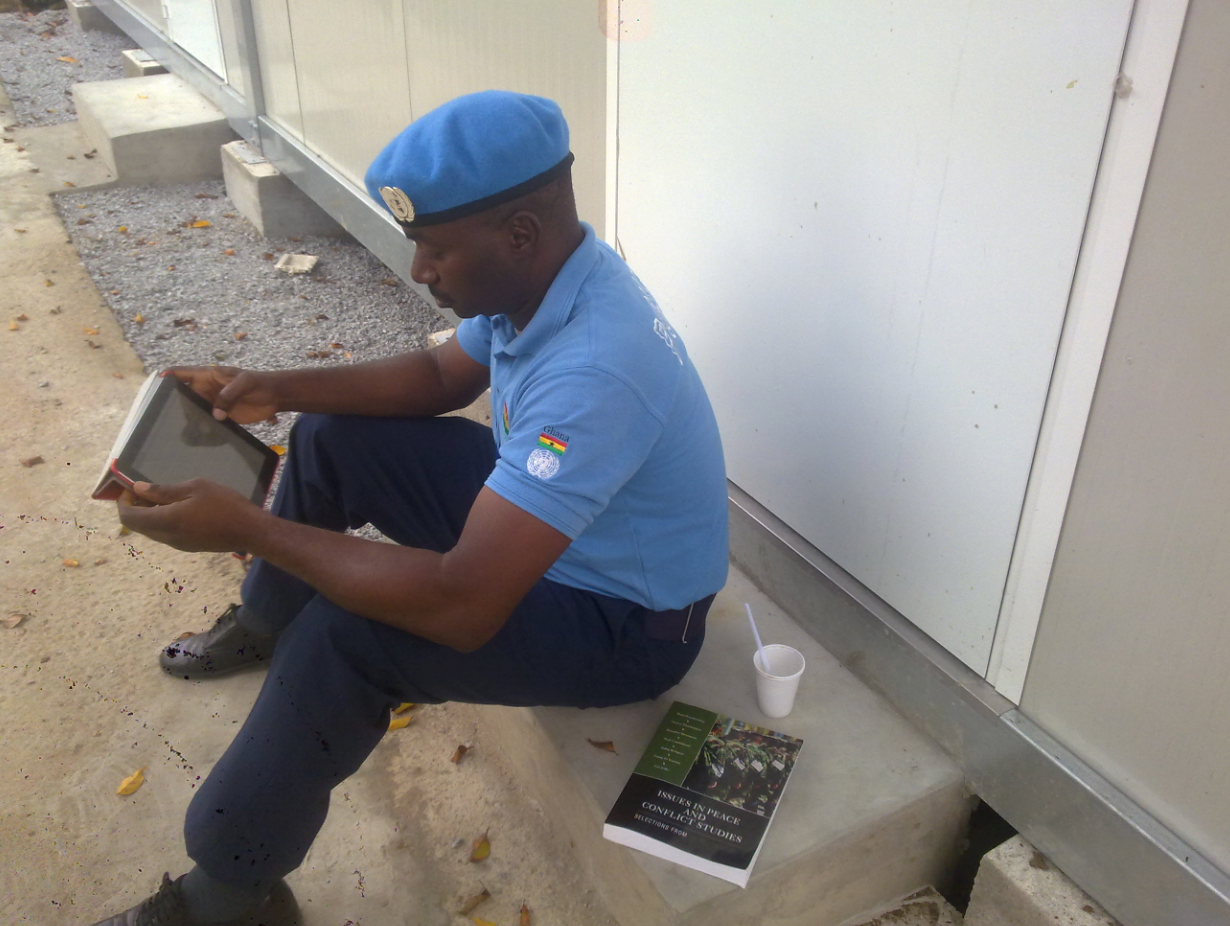
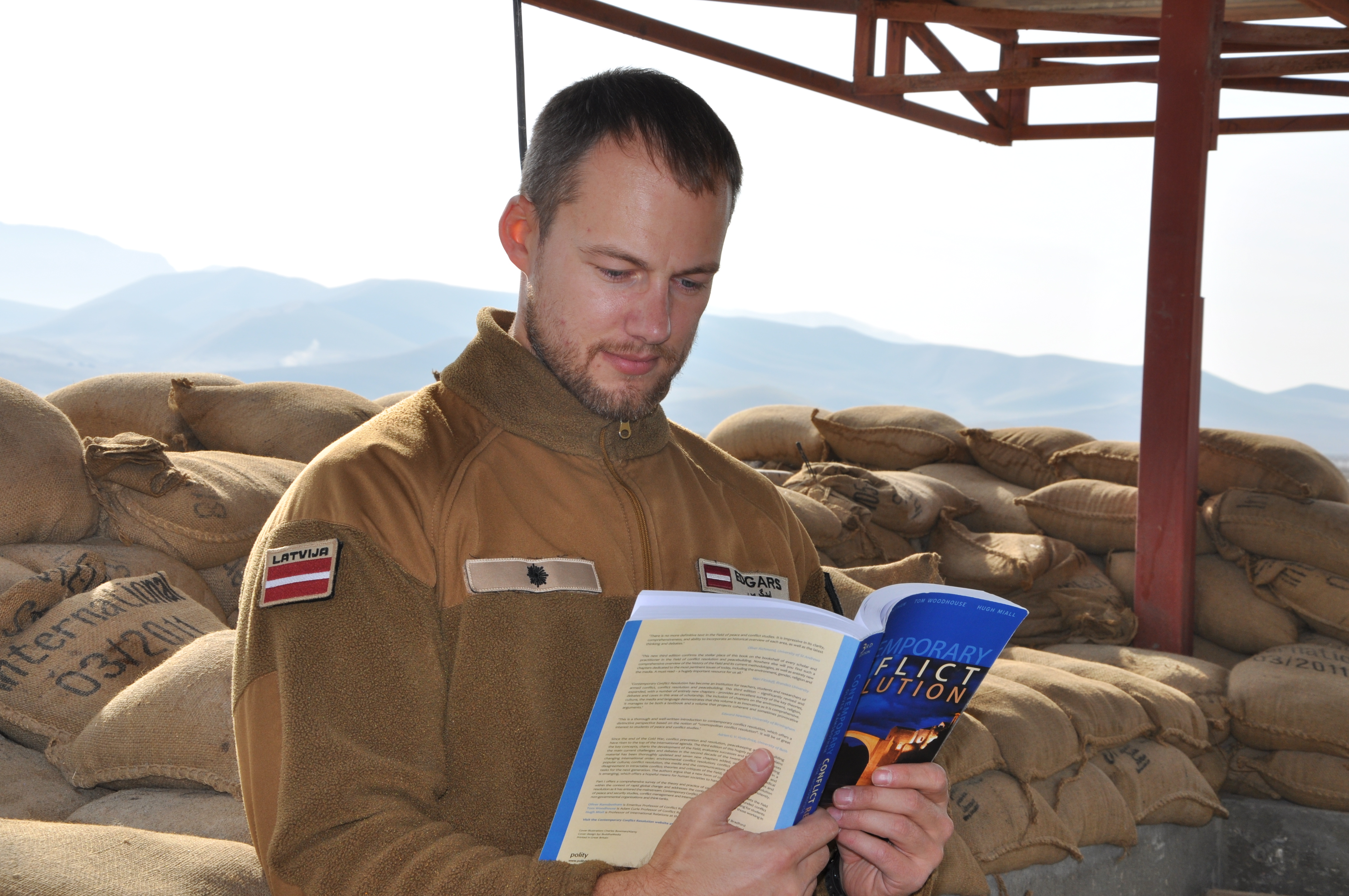
Further to a recent request to SCID students for images of accessing distance learning materials/the SCID Apps in unusual places, I have great pleasure in uploading a video that Ishaq Ibrahim very kindly sent to us last year, together with photos from Ishaq (in Côte d’Ivoire), Amy Reed (in Belize), Osbert Festus (in Spain) and Edgars Perijs (in Afghanistan) – thank you all very much for sending these and allowing me to upload them.

Amy Reed

Ishaq IbrahimOsbert Festus

edgards perijs SCID 2As mentioned before, if any other SCID student, affiliate tutor or Panel of Expert member has an image or video of themselves accessing SCID materials or studying/marking, please do upload or email to me (eg132@le.ac.uk). Thanks very much again, Ishaq, Amy, Osbert and Edgars!

The Responsibility to Protect – Research Seminar (Department of Politics)

A recording of a recent research seminar on “The Responsibility to Protect Ten Years on From the World Summit” by Dr Adrian Gallagher is now available to listen to on UoL’s Department of Politics SoundCloud website: https://soundcloud.com/user856379634. An overview of the meaning and history of the Responsibility to Protect (R2P) is given, before discussion of (often unrealistic) expectations of what R2P can offer.

Distance Learning in Unusual Places

Further to a recent request to SCID students for images of accessing distance learning materials/the SCID Apps in unusual places, Sandro Murro has very kindly provided this outstanding video of him accessing the Referencing Your Work guide where he works in Columbia – or at least gliding over near where he works! If any other SCID student, affiliate tutor or Panel of Expert member has an image or video of themselves accessing SCID materials or studying/marking, please do upload or email to me (eg132@le.ac.uk). Thanks very much again, Sandro!