Category Archives: Uncategorized

Conclusions of the Africa Forum on SSR

The African Union (AU) hosted the Africa Forum on Security Sector Reform (SSR) last week (24 – 26 November) in Addis Ababa, the conclusions of which were (taken from the AU report):

  • National ownership cannot be imposed from outside. It must be home grown, taking into account broader needs of all stakeholders in a particular context, with a view to transforming rather than strengthening already broken security institutions. Participants took particular note of the role of informal/traditional/customary security and justice institutions and stressed the need to better integrate them into reform processes.
  • The importance of political leadership in SSR processes. The need for political leadership was highlighted in all SSR stages including in the conception, resource mobilization, implementation, and coordination of national SSR processes, taking into account the fact that SSR can have far reaching political implications.
  • Limited capacity was identified as a major challenge to building effective and accountable security and justice institutions in conflict and post-conflict contexts. Participants emphasized strengthening linkages between SSR and DDR efforts as well as effectively integrating them into broader development and good governance priorities for reconstruction. They also stressed the need for incorporating gender as part of the process and expected outcomes of reforms.
  • African Union capacities in SSR need to be reinforced to better support the growing requests from its Member States. Participants highlighted the potential for technical SSR support that could be delivered by the African Union in light of the growing number of requests currently being directed to the AU by Member States. This support to Member States can only be delivered if there is adequate SSR capacity at the African Union.
  • Coordination remains a key challenge to implement SSR effectively. While coordination of SSR is a national responsibility, in practice, countries emerging from conflict often lack the capacity to coordinate international assistance. Participants identified some good practices in coordination including joint situation and needs assessment by partners to support countries in formulating their own vision for reforming the security sector.
  • Implementation of SSR must place an equal emphasis on the effectiveness of core security providers as well as their oversight and proper management. SSR involves not only building effective security institutions in a coherent manner, but it also involves laying down the foundations of good governance upon which they must stand. The latter remains a gap area for international support. However, the AU should not lose sight of the need to develop capacity to stop the violence and the atrocities in conflict areas before any SSR plans are put in place.
  • Good security sector governance, oversight and management, including in the area of public financial management, should be key priority areas for international support. There is a need to rebalance processes and programmes from predominant focus on capacity building to equal prioritization of effective, efficient and accountable use of existing and planned resources invested in reform initiatives. Participants agreed that security sector reform could be a significant expenditure burden to countries, which if left unchecked may crowd out other development priorities. Participants noted that reforms should therefore, be supported by robust public financial management laws and policy frameworks in order for them to be accountable and sustainable. Participants also identified innovative approaches and tools for transparent human resource management and procurement.
  • SSR is an important peace-building tool. SSR can enhance security for both the state and its people, bring peace and foster development and economic prosperity for all. Participants further identified important ingredients for success including inclusive structures for piloting reforms with the participation of civil society organizations and women. They further agreed on the need to build on quick wins that could lock-in momentum for long-term reforms.
  • SSR is also a critical stabilization instrument. The ability of SSR to address underlying causes of conflict comes from its commitment to dialogue. Parties to conflict can find power sharing solutions on national security issues through inclusive dialogue that does not necessitate the continuation of violent conflict and tragic pursuit of purely military solutions. In this regard, SSR may be used as a political tool to address violent security challenges, in particular in stabilization contexts.
  • The crucial role of regional and sub-regional organisations in SSR. Participants highlighted the important role that regional and sub-regional organisations can play in SSR processes in view of the cross-border nature of many peace and security challenges. At the same time, they noted the central role of the United Nations in all global peace and security issues, and the responsibilities of AU Member States to provide security for their own states and citizens.
  • Focus on implementation of SSR activities on the ground. It was pointed out that the AU has developed numerous policy frameworks, but a number of these policies are not being effectively implemented. The call was made to focus on the implementation of the AU Policy Framework on SSR as the way forward. (see more at: http://www.peaceau.org/en/article/conclusions-of-the-africa-forum-on-security-sector-reform-ssr-addis-ababa-24-26-november-2014#sthash.f2eT4dOr.dpuf)

These conclusions correlate with previous posts on SSR on this SCID Blog as well as much literature on SSR and its principles (notably work by Sedra, Nathan, Donais etc as well as many policy papers e.g. by UN, OECD, DCAF). Particularly for those SCID students who have recently completed the SSR assignment on the divide between policy and practice, it would be interesting to hear ideas about how to put the principles and prerequisites of successful SSR –  local ownership, good governance, co-ordination, political and financial commitment, and leadership – into practice in novel ways or ways that might generate more success than has been seen to date. Is it time to consider prioritising principles or conceptually distinguishing between SSR endeavours and aims in different contexts? Does SSR endeavour to do too much (contribute to stabilisation, peacebuilding, development) or too little (continuing to focus on training and equipping), or ensure the buy-in of too many (posing co-ordination problems) or too few (engaging only those local actors who share the same ideas)? In the aftermath of conflict, in particular, will human security ever really dwarf concerns about territorial security? Is SSR a way of legitimising increased and expanded external intervention, rather than ostensible local engagement and ownership? Will steps forward be made by those external actors engaged in SSR, only by taking a step back (and genuinely promoting local ownership) or will other cherished principles suffer (what of gender equality, inclusion, affordability e.g.)?

Eleanor

UoL Department of Politics – Conflict and Security Lectures

The Department of Politics at the University of Leicester hosts regular research lectures and seminars, including on subjects related to conflict, security and international development. These are available to listen to on the Department’s SoundCloud. Of particular interest are:

  • Dr Martin Smith (The Royal Military Academy Sandhurst), 14th May 2014
    How NATO Survived George Bush
  • Dr Sam Raphael (co-founder of The Rendition Project), 19th March 2014
    The Rendition Project
  • Prof Paul Rogers (University of Bradford), 5th February 2014
    Security by Remote Control

Best wishes, Eleanor

UN Peacekeeping and the Use of Force

Strategic StudiesThe latest issue of the Journal of Strategic Studies addresses the issue of UN peacekeeping and the use of force, considering how far this is removed from the UN’s original peacekeeping principles of consent, impartiality and the use of force only in self-defence. There is free access to the introductory article: Berdal, M. and Ucko, D. (2014) ‘The United Nations and the Use of Force: Between Promise and Peril’, Journal of Strategic Studies, 37(5): 665-673, DOI: 10.1080/01402390.2014.937803, which is accessible here or via: http://dx.doi.org/10.1080/01402390.2014.937803

Other articles are accessible via UoL’s online library (you will need to use your username and password): http://www.tandfonline.com/doi/full/10.1080/01402390.2014.937803#.VGSHuf1yaUk

INTERNATIONAL DAY FOR PREVENTING THE EXPLOITATION OF THE ENVIRONMENT IN WAR AND ARMED CONFLICT NOVEMBER 6

The final module in the SCID Courses considers the links between armed conflict and various transnational security risks, including climate change and environmental degradation – picking up on some of the issues address at the start of the course regarding the causes of conflict, such as resource scarcity, abundance and exploitation. This blog post explores the links between conflict and the environment, focussing particularly on the environmental harm caused by conflict. As environmental harm and degradation can contribute to the outbreak and escalation of conflict (where displacement or resource scarcity may have resulted, for instance) a vicious circle can be created where heightened insecurity increases the likelihood of further or sustained conflict and environmental harm.

Rise Up Times's avatarRise Up Times

INTERNATIONAL DAY FOR PREVENTING THE EXPLOITATION OF THE ENVIRONMENT IN WAR AND ARMED CONFLICT NOVEMBER 6

Though mankind has always counted its war casualties in terms of dead and wounded soldiers and civilians, destroyed cities and livelihoods, the environment has often remained the unpublicized victim of war.

“We must use all of the tools at our disposal, from dialogue and mediation to preventive diplomacy, to keep the unsustainable exploitation of natural resources from fueling and financing armed conflict and destabilizing the fragile foundations of peace.”

—Secretary-General Ban Ki-moon

oil pollution in NIgeriaA major independent scientific assessment, released by the United Nations Environment Programme in 2011, shows that pollution from over 50 years of oil operations in the region has penetrated further and deeper than many may have supposed. Photo credit: UNEP

On 5 November 2001, the UN General Assembly declared 6 November of each year as the International Day for Preventing the Exploitation…

View original post 209 more words

The ICC and its Impact: More Known Unknowns

The perceived tension between security and justice in the immediate aftermath of conflict is a recurring theme throughout the SCID Course. The following article may be of particular interest to SCID students soon to embark on their assignment for Module 2, when we will be looking at actors and activities involved in building security and justice after conflict, including those involved in transitional justice processes and mechanisms.

Mark Kersten's avatarJustice in Conflict

(Photo: Still Burning) (Photo: Still Burning)

As I mentioned yesterday, OpenDemocracy is hosting a symposium on the trials and tribulations of the International Criminal Court (ICC). Today’s article is my contribution to the debate and focuses on the impact of the ICC on the conflicts in which it intervenes. Here’s a snippet:

Given the amount of ink spilled on elaborating the ICC’s impacts, it may be surprising that we actually know very little about the Court’s effects on peace processes and conflict resolution. Indeed, as the former Chief Prosecutor of the International Tribunal for the Former Yugoslavia and the former Director of the International Crisis Group, Louise Arbour, observed: “We all repeat the mantra that there can be no lasting peace without justice; and that’s true enough. But I don’t think that we have yet resolved the inevitable tensions between the two in a workable fashion.”

This is at least in part…

View original post 545 more words

Are we entering a post-fieldwork era? The challenges of the neoliberal university and the digital revolution to fieldwork research

In advance of the 2015 SCID Symposium on Researching and Working in Conflict-Affected Environments, and for those of you working on your dissertations and research proposals, considering PhDs, or otherwise engaged in research, I hope you find this blog post by Roger MacGinty of interest.

rogermacginty's avatarrogermacginty

In many ways, research into peace and conflict has never been in a better place – particularly in the sense of the growing prominence of critical perspectives, and in growing trends towards inter-disciplinary approaches to research and teaching. Some of the research that one hears about at conferences or sees in the journals is genuinely innovative and infused with energy, critique and impatience with existing paradigms. And much of the research, often that conducted by PhD students, is based on innovative and courageous fieldwork that involves immersion in conflict-affected contexts, and a deep passion to try to understand local communities and dynamics.

The neoliberal university
But, behind these outwardly good signs, it is possible to notice increasingly strong signs that universities are shying away from fieldwork. Modern universities are corporations. Like all corporations they are risk averse. Their governance systems, and indeed raison d’etre, are increasingly given over to neoliberal…

View original post 1,101 more words

SCID Panel of Experts – Online Guest Lecture – Chris Sharwood-Smith – The UN Security Council

This is the sixth Online Guest Lecture by members of the SCID Panel of Experts. Chris Sharwood-Smith presents a lecture entitled ‘The United Nations Security Council’.

guest lecture advert Chris Sharwood-SmithThis Lecture addresses what the UN Security Council (UNSC) does in theory and in practice, including its historical context and methods of operation. It then considers various arguments and proposals for UNSC reform, and how various reform proposals have been responded to, before assessing the likelihood of reform in the near future.

Click on the link below to access Chris’ Lecture (it is large so it will take a while to download). Please submit any questions or comments within the next two weeks for Chris’ attention and/or discussion by other SCID Panel members, students and staff.

THE UNITED NATIONS SECURITY COUNCIL – Chris Sharwood-Smith Guest Lecture

SCID Alumni

The Department of Criminology at the University of Leicester is establishing an Alumni Mentoring Scheme. The Scheme is designed to provide second and/or final year students with one-to-one mentoring in their chosen career from former University of Leicester students. The scheme is intended to give students the opportunity to gain early career insights by learning from someone already working in their desired field. Should any SCID student be interested in being a Mentor, either now or at any stage after graduation, please contact Jessica Waelchli (jw600@le.ac.uk).

The Department of Criminology is also in the process of developing new marketing brochures for its courses. We would be very grateful if any current or former SCID student, or any member of the Panel of Experts, wanted to share a few words about the SCID Course that could be included in the brochure. Marketing have specifically asked for comments from alumni, which would be very welcome. Should you have any comments at any stage, please either post them here or email me, Eleanor Gordon (eg132@le.ac.uk).

Finally, the university’s distance learning team are looking for distance learning students who would be willing to send a high resolution photo of the most unusual place where they have accessed their course material or engaged with their studies (with a few words). The photos will be used in promotion material, the aim of which is to show the diverse and flexible nature of distance learning. Clearly SCID students are likely to be among those in the most challenging and remote environments, so if you are happy to send a photo to me (eg132@le.ac.uk) it would be very much appreciated.

Thank you and best wishes, Eleanor


Terrorism revisited by DAECH

At the time of the international coalition against the terrorist movement called DAECH, the major stake lies in the fact that this criminal and fundamentalist organization, changes the definition of “terrorism”.

Indeed, it is urgent that we do not speak any more about “Islamist state” because the “Montevideo Convention on the Rights and Duties of States” of December 26th, 1933, defines a “state” according to four essential characteristics which are:

1/ the existence of a bounded and determined territory. On this matter, DAECH extends over a territory going from Iraq to Syria so big as the United Kingdom. This territory is not internationally or regionally recognized, better it is disputed by Iraq and Syria who want to recover their territorial integrity.

2/ the existence of a resident population on this territory. The resident populations on this territory taken hostage in reality, are for certain sympathizers and others not. For proof, the massive exodus of religious minorities and diverse communities persecuted by the proclaimed caliphate.

3/ the existence of a minimal shape of government. DAECH is a theocratic, self-proclaimed entity which advocates a regime based on a rigorous interpretation of the Sharia. Abou Bakr Al-Baghadadi who proclaimed himself “Caliph” is the leader. He rejects democracy as well as secularism.

4/ the capacity to enter into a relationship with the other states. On this point, DAECH is in connection with no state worthy of the name. On the contrary, this entity challenges almost all the western states and those of the region.

It thus emerges from this analysis that DAECH is neither a state, nor an Islamic entity but a “terrorist fundamentalist entity”! So let’s not make the mistake to call that movement a “state” because it actually fosters its influence and gives credit to its actions.

Another major point to emphasize regarding this illegitimate entity is that, it contributed through its unseen way of functioning, to redefining the notion of terrorism which until recently was based on an asymmetric modus operandi and which suddenly becomes conventional.

Indeed, DAECH operates in two ways. On one hand, the terrorist insidious classic method through operations based on terror (kidnappings, attacks, threats, etc.) and on the other hand, the revolutionary method which rests on conventional warfare operations (a well-equipped and visible army which fights openly).

Let us not forget that DAECH has a strategic objective clearly assumed which is to establish a caliphate in the entire region and especially occupy Iraq and Syria. By the institution of this caliphate, DAECH shows its strength, wants to redefine the borders in the region and challenges the other terrorist groups such as Al-Qaeda and Boko Haram.

Besides, the modus operandi of DAECH could be summarized like this: “terrorize and rule “, instead of “divide and rule”. Terror and persecution are at the heart of the strategy of this terrorist movement.

Finally it seems convenient to sketch a strategy of fight against this plague which threatens the region. Indeed, Islam as religion advocating peace should be introduced in high schools worldwide in order to sensitize young people, who are potential victims to be recruited through the internet. The inadequacy between the fundamentalist groups’ practices and the genuine practice of Islam should be underlined. It would largely reduce the recruitment of teenagers. Besides, all religions should unite with the world Muslim community, so as to declare “DAECH outlaw”. This mobilization of the religious faiths could take the shape of an “International Statement to denounce the illegitimacy of DAECH “. The international isolation of this movement is a necessity.

Finally, the efforts made to implement a military strategy in order to overcome this strong group of some 35000 men are crucial and must be maintained, especially because the struggle will be long, costly and hard.

SCID Panel of Experts Online Guest Lecture – Malcolm Russell – Post-conflict intervention: a 3D model

This is the fifth Online Guest Lecture by members of the SCID Panel of Experts. Malcolm Russell presents a lecture entitled ‘Post-conflict intervention: a 3D model’.

Malcolm Russell advertStates used to be reluctant to take action inside the sovereign territory of another state unless they were at war with them, but it has now become an accepted international norm that there is a responsibility to protect civilians from excessive risk and to intervene where armed conflict crosses a certain threshold of acceptability.

Various international devices are used to legitimise such interventions and a rapid evolution has occurred in the past ten years since the Iraq intervention, that sees a more sophisticated and subtle approach. But still old problems remain. Intervening states assume primacy in much the same way they would have done had they been victors in a war. The perspective of the intervening state tends to lead the direction and high pace of the intervention, particularly in the early stabilisation phase as armed conflict starts to recede. The overall direction of transition is dictated by the intervening state’s world view but intervening states are not unitary actors and there are often, even with joint analysis and an integrated approach, conflicting claims and priorities between different parts of a state’s intervention apparatus and policy streams. This creates tensions and synergies which mask underlying problems of whether the planned and assumed intervention outcome is suitable, sustainable and sovereign in reflecting the views, needs and culture of the state in which the intervention takes place.

The rivalry between different aspects of the intervention and the assumption of the intervener’s values taking primacy and being appropriate to the needs of the local situation divert attention from true impact of the intervention. This is likely to result in unintended outcomes.

This lecture takes a 3D look at what this stabilisation phase of a post armed conflict intervention comprises and highlights some of these issues. This lecture also builds upon some of the issues and themes developed in Malcolm’s Symposium presentation – you can watch and listen to this presentation on this Blog (and in the SCID Course materials) and also read his paper in the recently published Reader, also available on this Blog and in the course materials.

Click on the link below to access Malcolm’s Lecture (it is large so it will take a while to download). Please submit any questions or comments within the next two weeks for Malcolm’s attention and/or discussion by other SCID Panel members, students and staff.

Post-conflict intervention – Malcolm Russell Guest Lecture

EBOLA OUTBREAK IN WEST AFRICA: LESSONS LEARNED AND PERSPECTIVES

The Ebola outbreak currently striking West Africa, is showing how fragile states are in this region. This short paper is not meant to negatively criticize those states and their efforts but is meant to emphasize what has been achieved to this date to fight against the disease and also what perspectives could be drawn for the future.

Lesson N°1: the ECOWAS late mobilization

ECOWAS as the major regional organization could have been more responsive and adopt collaborative and preemptive measures earlier to all member states. Indeed the lack of anticipation just contributed to the spread of the disease. ECOWAS should have in the early hours of EBOLA’s emergence mobilized all the member states in order to secure the borders of each state and adopt common measures to prevent any spread of the disease. Moreover, ECOWAS could have organized an urgent meeting for all the west African researchers (doctors, professors etc.) or beyond west Africa in order to foster regional research on that disease with the help of the African Union and the international community (NGOs and states). Financial resources could have been mobilized in order to finance that research and fight the disease. Further, effective regional surveillance can help to describe and monitor the epidemic and its spread.

Lesson N°2: An overwhelmed international community

Mr. Ban Ki-Moon, UN General Secretary, asked for the international community involvement in helping the affected countries, by providing suitable means which includes health personnel and technical assistance to those countries (Nigeria, Sierra Leone, Liberia and Guinea). Besides, the World Health Organization (WHO) announced that the spread of the disease has been largely under-estimated.

Until recently, the international community mobilization has been slow. The best example of that is the fact that experimental vaccines were made available only when two Americans were infected by Ebola. Those experimental cures could have been tested on affected Africans earlier in the outbreak.

On the other hand, NGOs such as “Medecins sans frontieres” (MSF) and the Red Cross, intervened and were involved at the very beginning of the disease and denounced the lack of resources and asked for more assistance. Today, those organizations face real resources problems and claim that the situation worsens faster than their capacity to face the spread. The latest figures are 1975 sick et 1069 deceased in Guinea, Liberia, Nigeria and Sierra Leone.

LessonN°3: the weak national security measures

EBOLA today is a major threat to the regional stability and national security. However neighboring states of the affected countries have not yet mobilized their security and defense forces in order to strengthen theirs borders surveillance and inviolability.

To this day major measures taken to avoid propagation include states boundaries being closed and recommendations made to the populations by the ministries.

So, All neighboring states (Guinea-Bissau, Senegal, Mali and Cote d’Ivoire) should put in place specific measures at their borders such as pre-positioning the military forces with detection means and having “containment centers” ready in case of outbreak within their boundaries.

Perspectives:

1/ African countries should in the future take full responsibility for organizing their own response to any disease and protect their populations. Further, a mobilization strategy, combining prevention and treatment should be defined and implemented.

2/ The African Union should before the end of the year, organize a summit in order to foster research and mobilizing resources (human and financial) for diseases such as Ebola which  concern the African continent (malaria etc.). This summit will foster the research for cures.

3/ The lack of a comprehensive regional strategy (common health and security measures) to fight Ebola might cause its propagation to other countries in the region for the coming months. So a comprehensive and coherent regional strategy from ECOWAS is needed urgently based on a technical and financial resource mobilization.

4/ Each African state should develop in the future, a national plan against Ebola and other “African” diseases (malaria etc.) in order to prevent those diseases and also to fight their propagation. Effective anticipation and preparation for all sorts of crises still prevails when it comes to facing major diseases and epidemics.

5/ International organizations such the IMF and the World Bank should require during negotiations with African states, the formulation and implementation of comprehensive national plans to research and fight “African” diseases such as Ebola, Sickle Cell  and Malaria.

New Publication – Building Security and Justice in Post-Conflict Environments: A Reader

Reader CoverOn 13 March 2014, the Department of Criminology at the University of Leicester hosted the first SCID Symposium. Ten members of the SCID Panel of Experts gave presentations on the theme of the Symposium – building security and justice in post-conflict environments. The broad range of papers presented at the Symposium addressed issues concerning stabilisation, state building, holistic security, Security Sector Reform, policing in post-conflict environments, transitional justice, community-based dispute resolution, and the value of conflict assessments. Papers were given by leading international experts on these issues with extensive first-hand experience of working in conflict and post-conflict environments. Presenters included former diplomats, retired senior police chiefs and military officers, government advisers, senior members of the legal profession, and senior officials in the UN system.

The papers presented are included in the SCID Reader – 2014 (bookmarked), which is also available on the Department website, as well as Course platforms (Blackboard and the iPad). The presentations given at the Symposium are also available to listen to and watch on the Department website, SCID Course platforms, and this Blog.

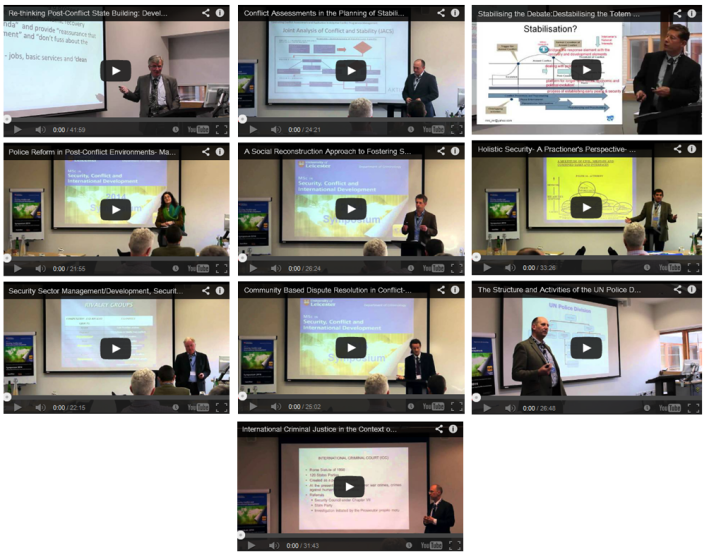
2014 Symposium Presentations – Videos

symposium images finalThe videos of the presentations given at the 2014 SCID Symposium are now available. They have been uploaded to the individual posts below and in the Symposium folder on this Blog. They are also available on the Department website and on the Course platforms (Blackboard and the iPad).

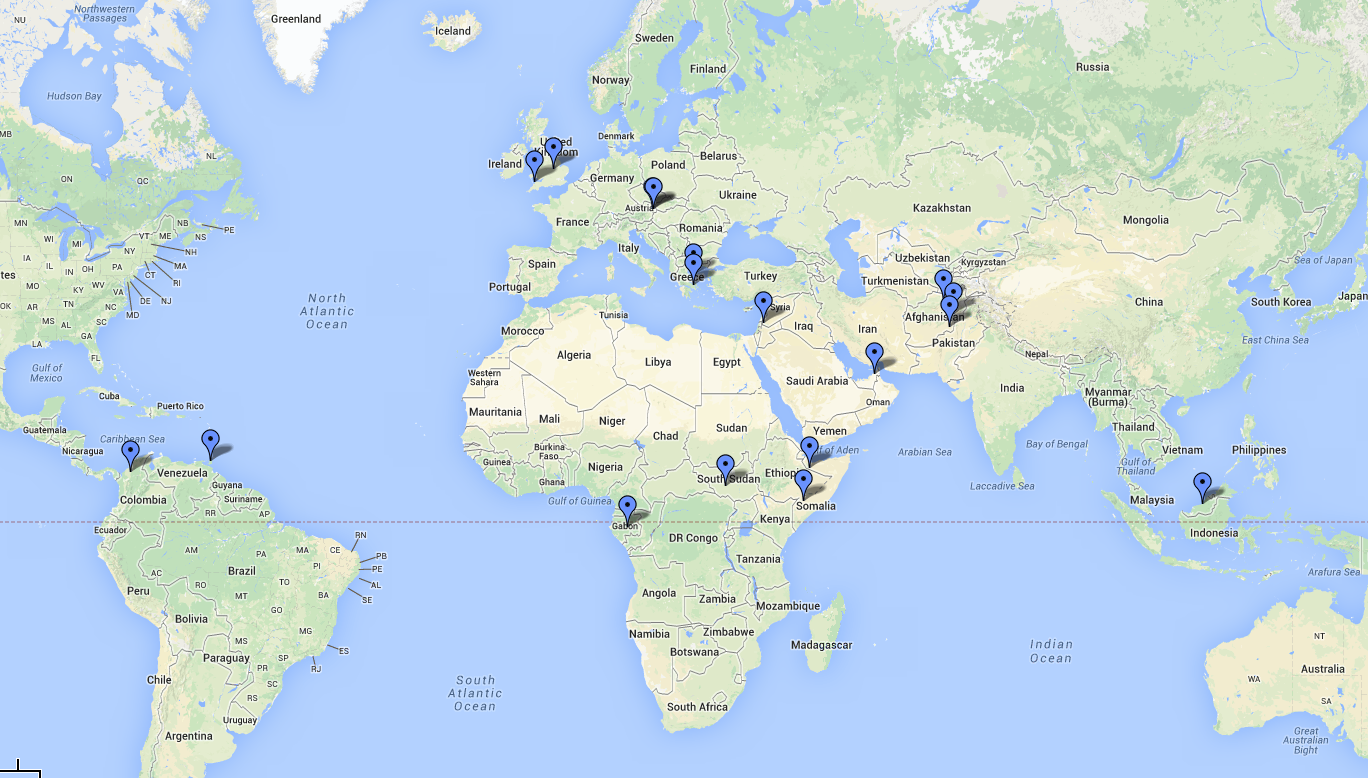
Current SCID Student Locations – Based in 34 Countries, Many Conflict-Affected

student locationsCurrent SCID students are based in 34 countries, many in conflict-affected environments. The map gives some  indication of the global demographic of SCID students and the conflict-related nature of their work. The interactive map is located on Blackboard where students are invited to pin their locations. Aside from providing useful information, the map should be useful to many students who may relocate or go on mission during and after the Course, who wish to contact fellow students and alumni already in that location.

Thoughts on governance in the security and defence sector

This short paper aims to share few thoughts on governance issues in the security and defence sector based on my personal assessment of cote d’Ivoire. Transparency International published an outstanding index in 2013 (GI2013) by assessing corruption risks in the defence sector. The topics (themes) that I cover below, all come from that Index. One can easily apply the guidelines to any country and adapt them to the national reality.

1/ Legislative scrutiny over defence and security policies:

There is a formal provision for effective and independent legislative scrutiny of defence policy in Cote d’Ivoire (article 71 of constitution). However, in practice, that provision is insufficient because the national Defence Policy formulation process itself is not mentioned in the constitution as being part of the National Assembly (NA) mandate for scrutiny.

Indeed, Article 71 of the constitution stipulates that only “Military Personnel status”, “the Police status” and “Defence organization” are all subjected to the national assembly inputs. This is largely unsatisfactory and limits the action of the National Assembly.

The budget issue is also mentioned in that article 71, so it is the responsibility of the NA to vote the national defence budget before it is implemented. There is to this date no evidence of such vote for the past 4 years.

At last, despite the fact that the legislative scrutiny is referred to in the constitution, the influence of the NA on the defence policy formulation has always been very limited if not ineffective.

So as a general recommendation, legislative scrutiny over defence and security policies in any country is necessary and clearly proves a good level of transparency.

2/ Public debate over the defence policy:

Unfortunately, in cote d’Ivoire, the national defence policy is not debated and publicly available. One major reason for that is the opacity surrounding this issue. Moreover, a national security strategy has been adopted by the National council for Security (CNS). Unless this security policy is adopted by the national assembly, it will not be publicly available.

Therefore, one must admit that efforts have been made to bring issues related to national defence to the public.

The security sector reform is bringing the authorities to formally formulate a national defence policy which is inclusive and holistic. For instance, the national SSR strategy is available publicly and has been debated openly (all SSR actors participated) before being adopted. On the other hand, a public consultation (survey) has not been done to this end.

At last, the national assembly has not yet examined and passed the Law related to  the National Security and defence  Policy. This is due to the fact that this policy has not been made available to the national assembly.

As a general rule for a country to prove a certain level of transparency and good governance, it is critical to involve the public in the formulation of any defence or security policy through a public consultation (survey).

3/ Anti corruption policy dedicated to the defence and security sector:

Cote d’Ivoire has an openly stated general anti-corruption policy. Indeed, “the national plan for good governance and against corruption” and “the order N° 202013-660 of September 20th of 2013 about prevention and fight against corruption” are the main anti-corruption instruments.  They also apply to the military forces and the police.

However there is no openly stated and actively implemented anti-corruption policy towards the defence sector exclusively. “The military code “ does not specifically address corruption issues that might concern the soldier. In 2013, the Ministry of Defence initiated an Ethical Charter and a military code of conduct.  To this day there is no evidence of any of those two initiatives to be effectively adopted by the national assembly or any other institution. Nor are they publicly available. To this date the ministry of defence has arrested many soldiers involved in racketeering, extortion and fraud. Still efforts have to be made to implement the rules equally among soldiers involved in such crimes.

So in order to be effective, an anti-corruption policy must be clearly stated and strongly implemented.

4/ Whistleblowing as a solution to fight corruption:

Whistleblowing as a mean to fight corruption is more and more encouraged by the government. There is a law that protects whistleblowers from any type of threat (Order N°202013-660, chapter 3). This law applies to any citizen whether he belongs to the defence or the security ministries.

It is almost impossible to say whether this law offering protection is working in practice because security must prevail for any whitleblower. However, the chapter dedicated to this matter exists. The law has to be applied. Besides, the lack of trust among military personnel prevents any whistleblowing activity.

Whistleblowing as a mean to fight corruption in the security forces is a effective way provided there are clear guidelines and that allegations are not made on a subjective basis.

5/ Objective appointment and promotion within the security and defence forces:

The military personnel are unfortunately not subjected to an independent, transparent and objective appointment system in cote d’Ivoire. Nepotism and tribalism have for the past 3 years harmed the whole selection process for appointments in the military. Indeed, there is a committee in charge of appointments within the military but this committee lacks independence and transparency. Most of the time appointments will be made accordingly to political orders coming from above. Since the end of the crisis in 2011, tribal biased appointments have been denounced by international NGOs such as International Crisis Group and Amnesty International.

Regarding promotions, theoretically, military personnel are promoted through an objective and meritocratic process. Besides, within the defence and security institutions can be found specific committees in charge of assessing potential candidates for promotion, in conformity with the law and internal rules. However, political consideration and favoritism sometimes weaken the process. In many cases external institutions influence decisions made by those committees. So there is no independent oversight on this matter.

Appointment and promotion are key matters when it comes to governance in the defence and security sectors. So they both have to be tackled very seriously.Objectivity and merit must prevail in the decisions made. Moreover, mechanisms created to manage appointments and promotions must be independent.

6/ Defence purchases coherence with identified and quantified requirements:

In cote d’Ivoire, most of the defence purchases made do not derive from any coherent assessment mechanism. So there are no clearly identified and quantified requirements. For some specific security situations, needs are identified and purchases made. So it is more opportunistic than thoroughly planned. For instance the latest purchase of surveillance and war vessels in 2014, does not comply with the national security strategy or any other policy document. However these maritime acquisitions derive from the need to counter maritime piracy and to show neighbors the maritime capacity of cote d’ivoire in case of dispute or crisis.

Coherence and conformity must prevail when it comes to defence or security purchases because requirements exist within security and defence policies and acquisition laws and must be implemented as planned.


Security Sector Reform, Local Ownership and Community Engagement

Security Sector Reform, Local Ownership and Community Engagement

I’ve just had an article published in Stability Journal on ‘Security Sector Reform, Local Ownership and Community Engagement’ should anyone be interested in this subject: Gordon, E 2014. Security Sector Reform, Local Ownership and Community Engagement. Stability: International Journal of Security and Development 3(1):25, DOI: http://dx.doi.org/10.5334/sta.dx

Abstract

Local ownership is widely considered to be one of the core principles of successful Security Sector Reform (SSR) programmes. Nonetheless, there remains a gap between policy and practice. This article examines reasons for this gap, including concerns regarding limited capacity and lack of expertise, time and cost constraints, the allure of quantifiable results and quick wins, and the need to ensure that other principles inherent to SSR are not disregarded. In analysing what is meant by local ownership, this article will also argue that, in practice, the concept is narrowly interpreted both in terms of how SSR programmes are controlled and the extent to which those at the level of the community are actively engaged. This is despite policy guidance underscoring the importance of SSR programmes being inclusive and local ownership being meaningful. It will be argued that without ensuring meaningful and inclusive local ownership of SSR programmes, state security and justice sector institutions will not be accountable or responsive to the needs of the people and will, therefore, lack public trust and confidence. The relationship between the state and its people will be weak and people will feel divorced from the decisions that affect their security and their futures. All this will leave the state prone to further outbreaks of conflict. This article will suggest that the requisite public confidence and trust in state security and justice sector institutions, and ultimately, the state itself, could be promoted by SSR programmes incorporating community safety structures.

First SCID Graduation

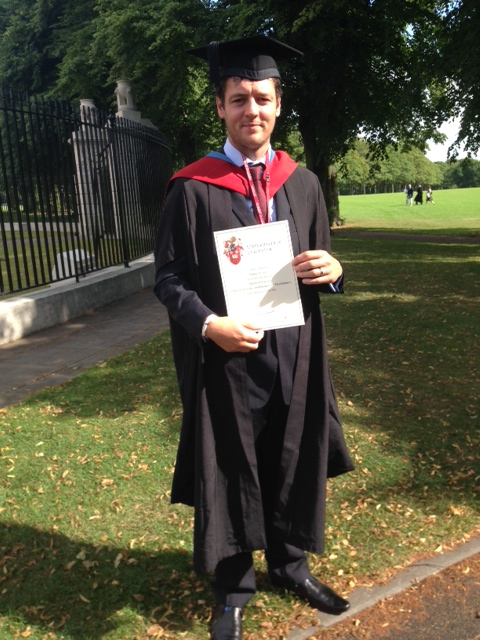
This summer, the very first students of the MSc programme in Security, Conflict and International Development (SCID) graduated.

WP_002782SCID graduates Tim Ford and Stephen Coller attended the graduation ceremony held at the University of Leicester on 15 July 2014. Graduating with Merit and after 30+ years in law enforcement in the UK and internationally, Stephen Coller graduationTim Ford is now looking to specialise in Security Sector Reform, and welcomes any opportunities in this regard. Stephen Coller continues his career with An Garda Siochana in Dublin, with whom he has been working for over 10 years, specialising in investigating Drug Supply/Distribution. Stephen also intends to use the MSc to further a career in the national/international arena, particularly in the field of drug control (ideally with UNODC). Anyone wishing to contact either Tim or Stephen, or any of the SCID alumni, can reply to this post or send me (eg132@le.ac.uk) a message which I can forward.

With very many congratulations to all of the SCID graduates (intake March 2012) – very well done for all your hard work and commitment. Please do keep in touch, via this Blog (www.uolscid.wordpress.com), JISCMail (uolscid@ jiscmail.ac.uk), Twitter (@SCID2012) and through the Department).

Combating Sexual Violence in Conflict

Below is one of many videos now available of presentations given at the Global Summit to End Sexual Violence in Conflict, held last month in London, which a couple of members of the SCID Panel of Experts attended. You can find more on the Global Summit from http://www.gov.uk/endsexualviolenceinconflict20­14 and https://www.facebook.com/EndSexualViolenceInConflict, and more FCO videos on YouTube at https://www.youtube.com/channel/UCWl6ZVke4P2GYpk6eq4BPIQ. In this video, Lieutenant General David Morrison, Australian Chief of Army, addresses the closing plenary on the role of soldiers in ending conflict-related sexual violence.

https://www.youtube.com/watch?v=HZAFEorwqv0#t=235

2014 SCID Symposium – Whit Mason – Failed State Building: A Social Reconstruction Approach to Fostering Security and Justice after Conflict

https://soundcloud.com/criminology-uni-of-leics/a-social-reconstruction-approach-to-fostering-security-justice-after-conflict

This is one of the ten presentations delivered at the first SCID Symposium, which are being individually uploaded here (where you can comment upon and discuss issues related to a particular presentation) and uploaded on to the Symposium page of this Blog, for ease of reference. I look forward to further discussion of some of the critical issues raised within these presentations on the subject of building security and justice after conflict.

In this presentation, Whit Mason advocates for a social reconstruction approach to building security and justice after conflict. Whit suggests that much thinking about efforts to build security and justice after conflict is very narrowly focussed, and rarely draws – for example – from the work of the great jurists and political philosophers, or the experience of places which have become stable and where security and justice prevails. Whit argues that one of the main problems of this field is that it understands itself and its domain very narrowly, and that the corpus of thinking from which it draws is very limited. For instance, the work of the sociologist Norbert Elias, who investigated, among other things, the connection between centralised authority and people developing the habits of restraint that are common to civilised societies, is generally ignored because his work is not seen as part of the corpus of thinking relevant to this field. This is one of the reasons why deep and meaningful lessons and insights are hard to find when reflecting upon how best to resolve conflict and build peace. Consequently, Whit argues that we should enlarge the scope of what we think we are doing when we aim to rebuild security and justice. Also, it is argued that we need to think more about what we think we are doing, how societies operate and the principles upon which they are based, and how interventions intersect with the organic operations of society – if peacebuilding efforts are to be more successful. Whit concludes that we need to be more honest and clear about the reasons why we intervene; think more deeply about the reasons for conflict and why people engage in armed conflict, for instance, notably why people perceive there to be no better viable alternative; and what can outsiders do, if anything, to help people change these perceptions.

Whit Mason has worked as a journalist, political analyst and strategist, UN speechwriter, USAID outreach director, NGO Chief of Party, academic researcher, and think tank fellow, in many societies, including those affected by conflict. He has written extensively on the political aspects of development and conflict, including co-authoring a critically acclaimed book, Peace at Any Price: How the World Failed Kosovo and Zealous Democrats: Islamists and Democracy and editing The Rule of Law in Afghanistan: Missing in Inaction. He is an expert in strategic communications and is also a Research Associate at Oxford University’s Centre for International Studies.